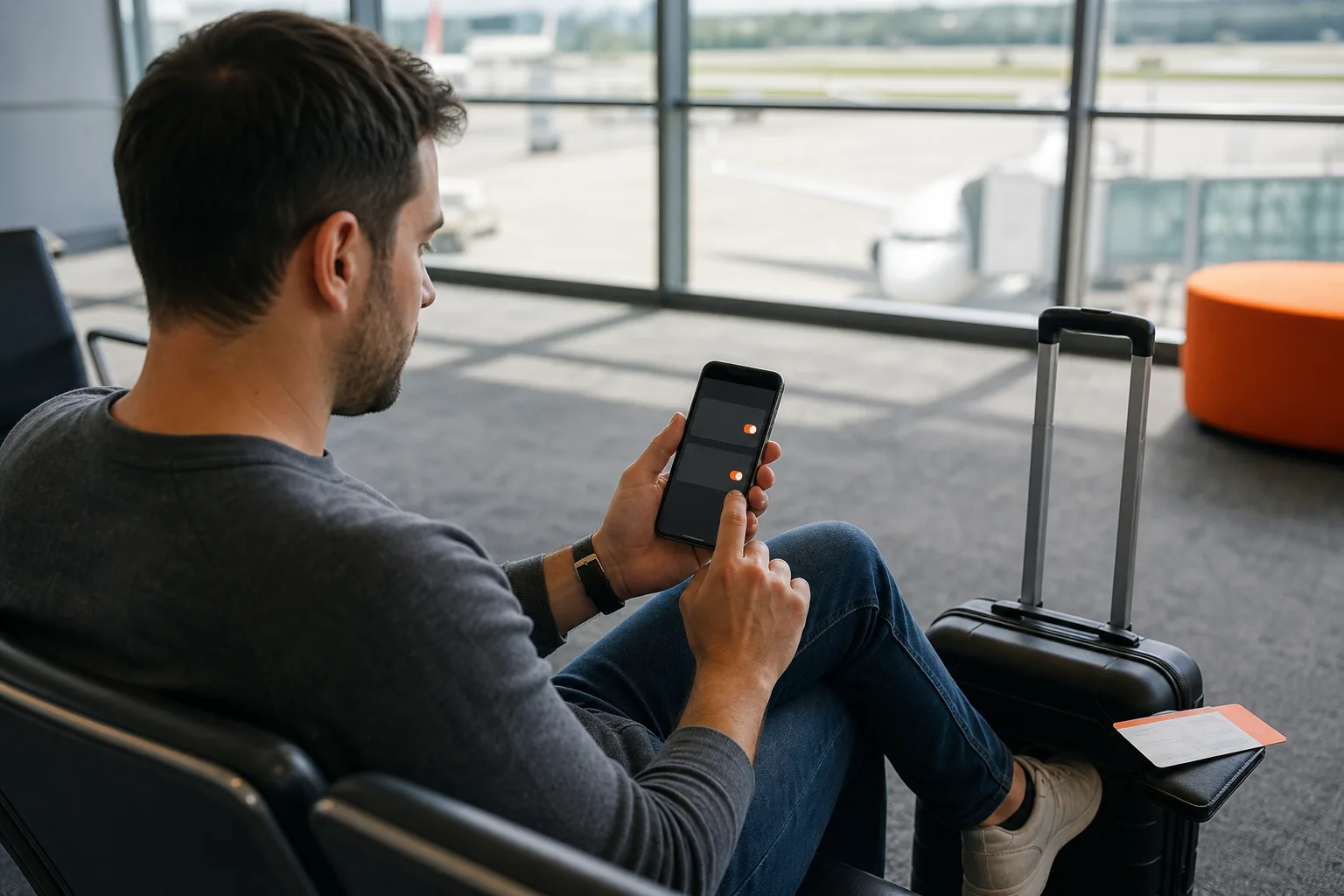
A cheap eSIM can still leave you without calls, hotspot access, or a working connection when you land. The word “global” doesn’t tell you much on its own. We found that the right choice depends on your route, data use, phone settings, and tolerance for fine print.
Use these steps to choose, install, and manage an eSIM for international travel without wasting money on data you can’t use.
We checked the official help center or FAQ page for 10 travel eSIM providers: Airalo, Holafly, Nomad, Saily, Truely, Breeze, Sim Local, Roamless, MobiMatter, and aloSIM. Eight of them, Holafly, Nomad, Saily, Truely, Breeze, MobiMatter, Roamless, and aloSIM, sell data-only plans by default, with no phone number or SMS included. Only Airalo and Sim Local list plans that include native voice calls and text messaging. Checking that detail before buying decides whether an eSIM for international travel replaces a phone number or only adds data.
Step 2: Match Coverage and Plan Types to Your Itinerary
For an eSIM for international travel, coverage starts with your exact route. Write down every country, including a short airport stop or island that may fall outside a regional plan.
Then choose the plan shape:
Country plan: Best when you stay in one nation.
Regional plan: Useful when your route crosses nearby countries.
Global plan: Handy for frequent border crossings, but check the actual country list.
Pay-as-you-go: Useful when dates or data use are hard to predict.
Coverage claims vary. Airalo, Nomad, and Saily are reported across roughly 190 to 200 or more destinations, but broad coverage doesn’t mean voice service. Several high-coverage plans are data-only. Some require an added fee for a phone number.
Roamless takes a different route. Its coverage is reported at 195 countries, with pay-as-you-go credit, optional 30-day plans, app top-ups, and data that doesn’t expire. That flexibility can help on a long trip with gaps between destinations. It can also cost more than a fixed plan if you use a lot of data in one place.
Truely covers more than 190 countries and uses country or regional options with unlimited daily data. Its pause-day feature may suit a long itinerary with travel days when you don’t need mobile data. Breeze has fixed plans from 1GB to 50GB, plus unlimited options lasting between one and 30 days.
Don’t treat “unlimited” as a magic word. Some plans slow down after a daily high-speed allowance. Sim Local, for example, is reported to provide up to 10GB of high-speed data per day on its unlimited plans. That may be plenty for maps and messages. It may not cover a full workday with video calls and laptop tethering.
Coverage also depends on the local network. A plan may work well in a capital city yet struggle on a remote road. Check the provider’s country page for network partners before paying. The MobiMatter marketplace homepage is useful for seeing how plans can differ by destination, validity, and data allowance, though the listing details still need a close read.
Price ed prices range from $0.20 per GB for MobiMatter to $3.50 per GB for Nomad and aloSIM. The cheapest figure may come with strict refund rules or activation problems. A slightly higher price can be fair if it saves you from buying a second plan at the airport.
Before checkout, confirm these details:
Countries covered by the exact plan.
Validity start date.
High-speed allowance before throttling.
Hotspot or tethering rules.
Refund terms after installation.
Key Takeaway: Choose coverage for the route you will actually drive, ride, or fly, then compare the plan’s limits.
Step 3: Choose the eSIM Type for Your Travel Style
The right eSIM type depends on how you use your phone abroad. A person who checks a map twice a day has a different need from someone who works through a laptop hotspot.
For light data on short trips
Pick a small fixed bundle with a clear expiry date. Airalo has plans with different data allowances and validity periods. Nomad lists fixed bundles such as 1GB for seven days, 3GB for 30 days, and 10GB for 30 days, along with unlimited options. Both suit travelers who want to pay for a known amount instead of an open-ended daily rate.
Watch the expiry clock. A plan that lasts 30 days may begin on installation, activation, or connection, depending on its terms. Install it at home only if the provider says the validity period won’t start until arrival.
For heavy data and work trips
Look for a stated high-speed allowance and hotspot permission. Truely reports unlimited daily data with the option to pause days. Sim Local reports up to 10GB of high-speed data per day on some unlimited plans. Those details are more useful than the word “unlimited” by itself.
Holafly sells preset bundles built around unlimited data. That can make budgeting easier, but the plans tend to cost more and may have less coverage than flexible alternatives. If your work depends on tethering, read the hotspot clause before you pay.
For long stays and many borders
Saily has country, regional, and global plans ranging from 1GB to unlimited. It also lists app tools such as a virtual location feature, an ad blocker, and web protection. These extras may appeal to full-time travelers, but they don’t replace a phone number or guarantee service in every place on a global plan.
Roamless can fit a trip with uncertain dates because its pay-as-you-go data does not expire. You can add credit in the app and use its calling feature separately. The trade-off is simple: you pay for flexibility, so a fixed regional bundle may cost less for a settled itinerary.
Travel pattern
Plan type to check
Detail that can change the decision
Weekend in one city
Country bundle
Small allowance with short validity
Several countries in one region
Regional bundle
Every border on your route must be listed
Remote work
Unlimited or large fixed plan
Hotspot access and high-speed cap
Open-ended travel
Pay-as-you-go or pause-day plan
Expiry and top-up rules
Calls to landlines
Plan with voice support
Data-only plans won’t cover normal calls
Plan flexibility scores vary widely. A few services with unlimited daily data or pause-day tools pull the average up, while many plans still sit around a single-digit flexibility score. The useful comparison is the rule you need, not a general rating.
If you need a normal number for calls or texts, focus on that requirement first. Many travel eSIMs are data-only. With those plans, internet calling works, but a hotel, airline, or local clinic may still ask for a standard number.
Step 4: Buy, Install, and Activate Your eSIM Before Departure
Install the eSIM at home, while you have stable Wi-Fi and time to fix a mistake. The goal is to arrive with the profile ready, not to scan a QR code beside a crowded baggage belt.
First, check your phone model on the provider’s compatibility list. Confirm that your phone is unlocked. On an iPhone, look under Settings, General, and About for the carrier lock status. Android menus vary by maker, so use the device’s SIM settings and the provider’s instructions.
Next, buy the plan from the provider’s app or website. Save the confirmation email and QR code. Some services install through an app. Others ask you to scan a QR code or enter details by hand. QR activation is common, but research data shows that many providers don’t explain the full process until after purchase.
Keep your home line active if you need its number for calls, texts, or bank codes. If you are also choosing a payment card for the trip, compare foreign transaction fees and travel protections in our guide to the best credit card for international travel. Set the travel eSIM as the mobile-data line. Turn off data roaming on your home line unless you knowingly want to use it.
Leave the travel eSIM switched off until you arrive when the provider says activation begins at first connection. If the plan starts on installation, install it closer to departure. Read that term twice. It can decide whether a 15-day plan covers the whole trip.
Install before departure because activation may need an internet connection. Check your phone’s current cellular settings when the menu differs from an older model.
Once you land, switch on the travel line. Select it for cellular data. Turn on data roaming for that line if the provider requires it. Wait for the phone to register, then test a map app and a simple web page before leaving the airport.
Pro Tip: Save the QR code offline and write down the provider’s support route before the flight. You may not have data when you need help.
Step 5: Manage Data and Fix Common Travel-Day Problems
Managing an eSIM for international travel is mostly about choosing the correct line and watching your allowance. Do it before a data cap turns a train ticket search into a problem.
Label each line clearly, such as “Home” and “Trip data.” Set the travel eSIM as the data line. Keep automatic switching between lines off if your phone has that option, since the home line could trigger roaming charges.
Check the provider’s app for balance and expiry. Airalo’s app includes usage information, top-ups, and data management. Other providers may show a balance in the app or account area. Use the provider’s figure as the main record because your phone’s estimate may differ.
If data runs out, connect to trusted Wi-Fi before buying more. If the phone shows no service, try these fixes in order:
Confirm that the travel line is on.
Check that it is selected for mobile data.
Turn data roaming on for that line.
Switch airplane mode on for 15 seconds, then off.
Restart the phone.
Check the APN instructions, especially on Android.
Try a listed network manually if automatic selection fails.
Don’t delete the eSIM while troubleshooting. Some providers won’t let you reinstall the same profile after deletion. If the connection is slow, check whether you reached a high-speed cap before changing settings.
For calls going to the wrong line, set the home line as the default voice line and the travel line as data. For a missing connection after a software update, review the SIM list and restart the phone before contacting support.
We also keep offline maps, the hotel address, and the booking confirmation on the phone. An eSIM reduces one travel-day problem. It doesn’t remove the need for a backup plan.
Frequently Asked Questions
What is the best eSIM for international travel?
The right eSIM depends on your route and data use, not a single universal winner. Choose a country plan for one destination, a regional plan for nearby countries, or pay-as-you-go service when dates are uncertain. Then check hotspot access, voice support, high-speed limits, activation timing, and refund terms.
Are international travel eSIMs data-only?
Many international travel eSIMs are data-only. They work with WhatsApp and other apps that use mobile data, but they don’t provide a normal phone number. If you need calls to hotels, airlines, or landlines, select a plan that clearly includes voice service or keep your home SIM active.
Should travelers install their eSIM before flying?
Yes, install it before flying when the provider allows it. Use home Wi-Fi, save the QR code offline, and leave the line off if activation begins on arrival. Check the plan’s rules first because some plans start their validity when installed rather than when they connect abroad.
Can I use an eSIM as a hotspot?
You can use an eSIM as a hotspot only when the specific plan allows tethering. Some providers permit it, while others limit the amount or block it. Remote workers should treat hotspot access as a purchase requirement and check the fine print before choosing an unlimited plan.
Final Thoughts
I recommend choosing the smallest plan that covers your route, then paying more only for a clear need such as hotspot access, voice service, or flexible expiry. Before departure, install the eSIM on Wi-Fi, label your lines, save the setup details offline, and test the connection when you land. That small bit of prep can save a whole travel day.
Six offline maps apps compared for travel: Organic Maps, OsmAnd, HERE WeGo, Google Maps, Maps.me, and Gaia GPS. Which one belongs on your phone before you fly.
Verdict: For most travelers, Organic Maps is the app to install first: free, no ads, no tracking, and accurate to within 5 metres on foot. Add HERE WeGo if you are doing a road trip in Europe or the US. Add OsmAnd if you are hiking or cycling off-road. Google Maps offline is a decent backup but not a primary tool.
Real-time translation earbuds tested and ranked for travel: latency, offline support, accuracy, and price. Find the right pair for how you actually travel.
Verdict: For most travelers, the Timekettle W4 Pro ($449) is the only earbud that makes two-way conversation genuinely hands-free — one earbud per person, 0.2-second latency, no tapping required. Budget travelers who just need to get through airports and markets will do fine with the ANFIER M3 ($89.99), which handles 144 languages online and 8 offline for a fraction of the price.
The best eSIM for Switzerland, ranked by price per GB and network coverage. Switzerland is not in the EU, so a Europe plan can leave you offline. The picks.
Verdict: For a city-and-train trip through Switzerland, Nomad is the pick, because 10 GB for 30 days is $20.50 and it rides the Salt and Sunrise networks that cover the routes tourists actually take. If you are heading into the high Alps and want data that does not quit in a valley, buy Holafly instead, whose plans can ride Swisscom, the strongest mountain network, at $50.50 for 15 days of unlimited data.