ESIM for International Travel: How to Choose
Compare eSIM coverage, data plans, prices, activation, and limits to choose an eSIM that fits your international trip.
Verdict: For most travelers with an iPhone, the AirPods Pro 3 ($249) are the right earbuds for airplane use — 8 hours of ANC on a charge, near-best noise cancellation, and the only pair here that adapts to cabin pressure changes. Android users who want maximum ANC should go to the Sony WF-1000XM6 ($329), which scored highest in real-world in-flight testing.
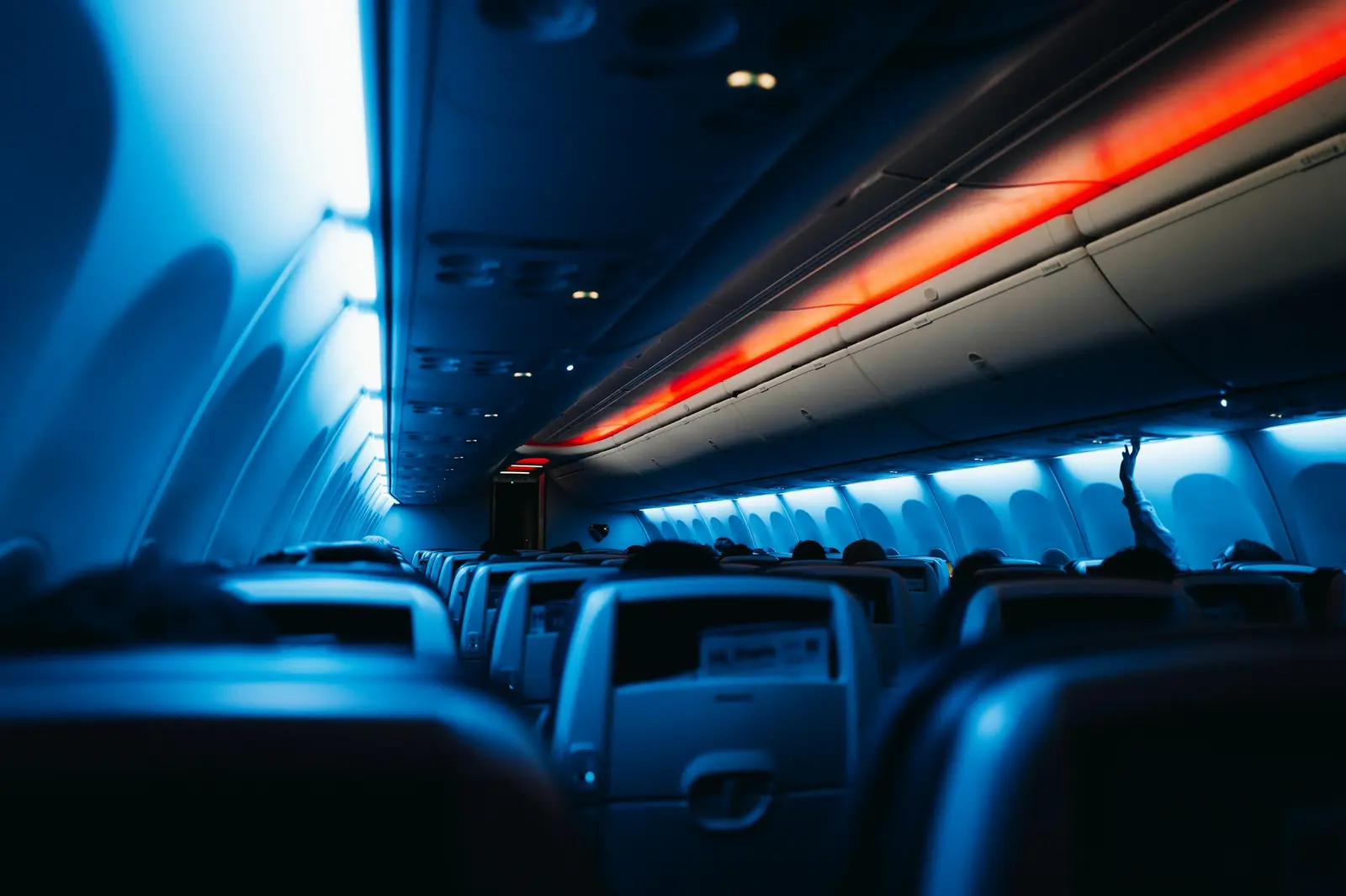
If you sleep with your head against the window on long flights, every over-ear headphone becomes a problem around hour three. The earcup fights the window. You wake up. The earbuds vs. headphones debate resolves itself: you want earbuds.
The question is which ones actually kill airplane engine noise. Engine drone sits mostly in the low frequencies — 50 to 200 Hz — which is exactly what active noise cancellation is best at removing. The catch is that earbuds deliver ANC through a smaller driver cavity than over-ear cans, so the engineering gap used to be significant. In 2025 and 2026, that gap has mostly closed.
Some links in this article may be affiliate links. We only recommend products we would genuinely use ourselves.
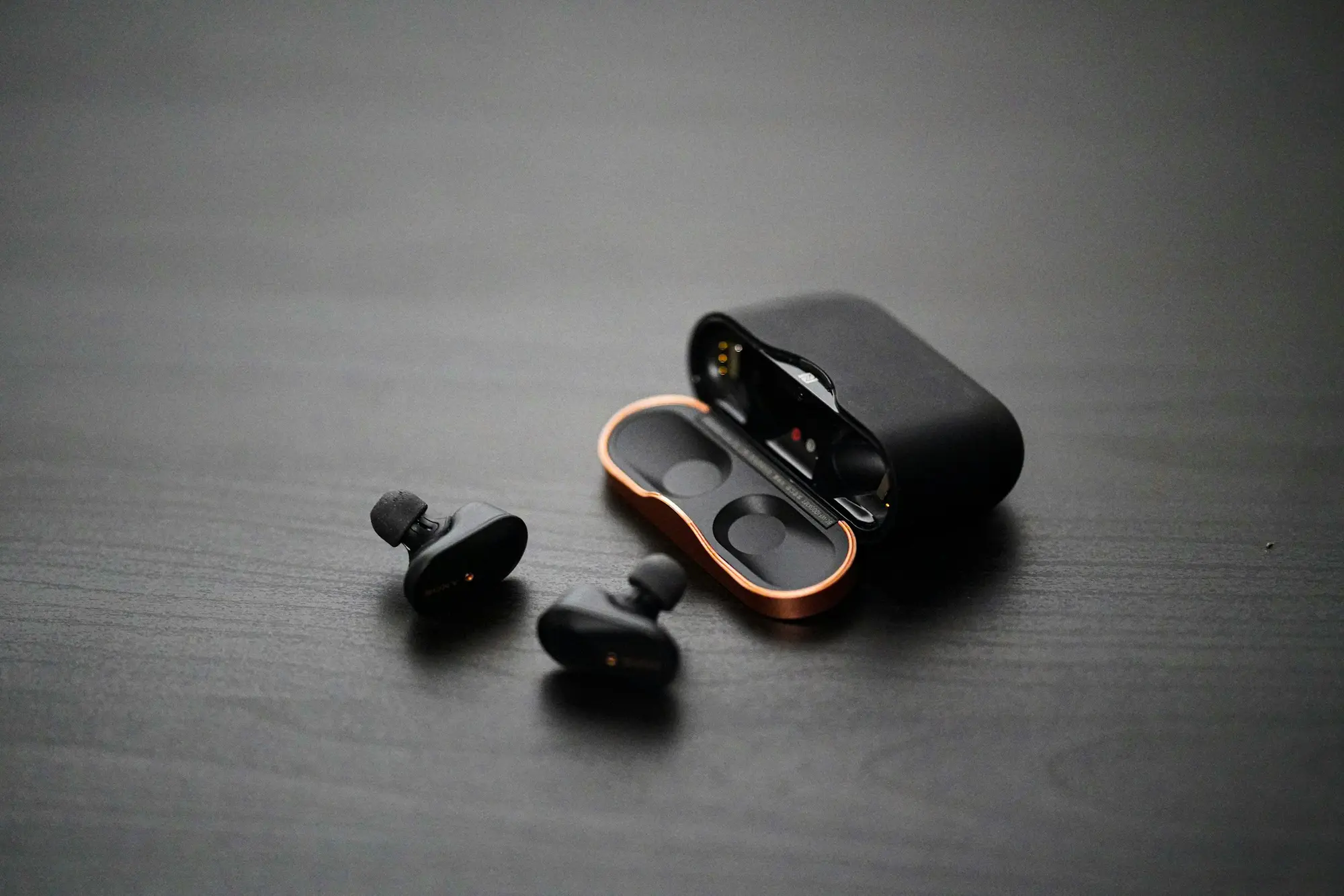
The Sony WF-1000XM6 has the best raw ANC of any earbud on the market right now. In a real-world test on a 12-hour Boeing 787 flight over the Pacific, it scored highest of the three flagship options tested (Sony, Apple, Bose), essentially eliminating low-frequency engine rumble. The tradeoff: it costs $329, the fit requires foam tips to get right, and the case only gives you 16 hours total — tight for a multi-leg trip.
If you have an iPhone and want the safer pick, the AirPods Pro 3 ($249) are almost as good at ANC, cost $80 less, give you 32 hours total with the case, and adapt to cabin pressure changes during ascent and descent — something Sony and Bose do not do. For most travelers, that combination wins.
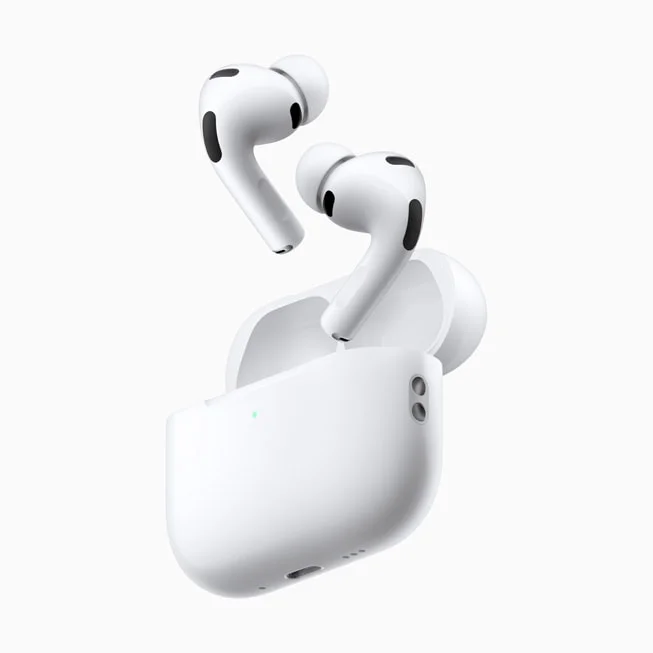
Photo: Apple Newsroom
Price: $249 | Battery with ANC: 8 hours | Total with case: 32 hours
Released in September 2025, the AirPods Pro 3 deliver 2× better noise cancellation than the Pro 2 and 4× better than the original AirPods Pro. In the SoundStage Solo 12-hour in-flight test across three flagship earbuds, they ranked second behind the Sony WF-1000XM6 — letting in a “tiny bit more low rumble” than the Sonys while producing slightly less wind noise. The difference in everyday listening terms: both are exceptional; the Sony is marginally quieter.
What the AirPods Pro 3 do that Sony and Bose do not: adaptive ANC for cabin pressure. As the aircraft climbs and descends, cabin pressure shifts and the eardrum pressure equalizes differently. The AirPods Pro 3’s ANC adapts in real time to these changes, which reduces the mild pressure discomfort some travelers notice during takeoff and landing. If you experience ear pressure on flights, this alone can justify the choice.
Battery life is also the best of the three: 8 hours per charge, 32 hours total with the case. That covers most transpacific or transatlantic routes on a single bud charge, with plenty of case backup.
The caveat: most of the advanced features, including spatial audio handoff and seamless device switching, require an iPhone with iOS 18 or later. On Android, the AirPods Pro 3 work, but they work like a standard earbud — ANC still functions, but the ecosystem advantages disappear.
Price: $329 | Battery with ANC: 8 hours | Total with case: 16 hours
Released February 2026, the WF-1000XM6 earns the top ANC score in the SoundStage Solo in-flight test — rated 100 out of 100 against 98 for AirPods Pro 3 and 96 for Bose. The reviewer, who tested all three on the same 12-hour flight, described the Sony as “basically eliminating all low-frequency rumble,” leaving only a faint sound resembling a room fan. That is the closest any earbud gets to silence at altitude.
The XM6 achieves this through a new QN3e processor and eight microphones — 25% better ANC than its predecessor, the WF-1000XM5. The driver is 8.4mm, Bluetooth 5.3, and it supports LDAC for lossless wireless audio if your source device supports it.
There are two reasons to choose the AirPods Pro 3 instead. First, the Sony’s total case battery is 16 hours — half the AirPods’ 32 hours. For a 14-hour flight followed by a connection, you are recharging the case mid-trip or carrying a USB-C cable into the airport. Second, the XM6’s superior ANC depends on a good fit with the foam tips. If you get a poor seal, the ANC advantage over the AirPods narrows significantly. The silicone tips ship in the box, but the foam tips that the reviewer used for the flight test are sold separately.
At $329, this is the right call if you have an Android phone, if you fly long-haul frequently, and if you do not mind managing the shorter case battery.
⚠️ Product image for the Sony WF-1000XM6 is pending — Sony’s press assets are bot-blocked. If you need to see the product before buying, check the official Sony product page.
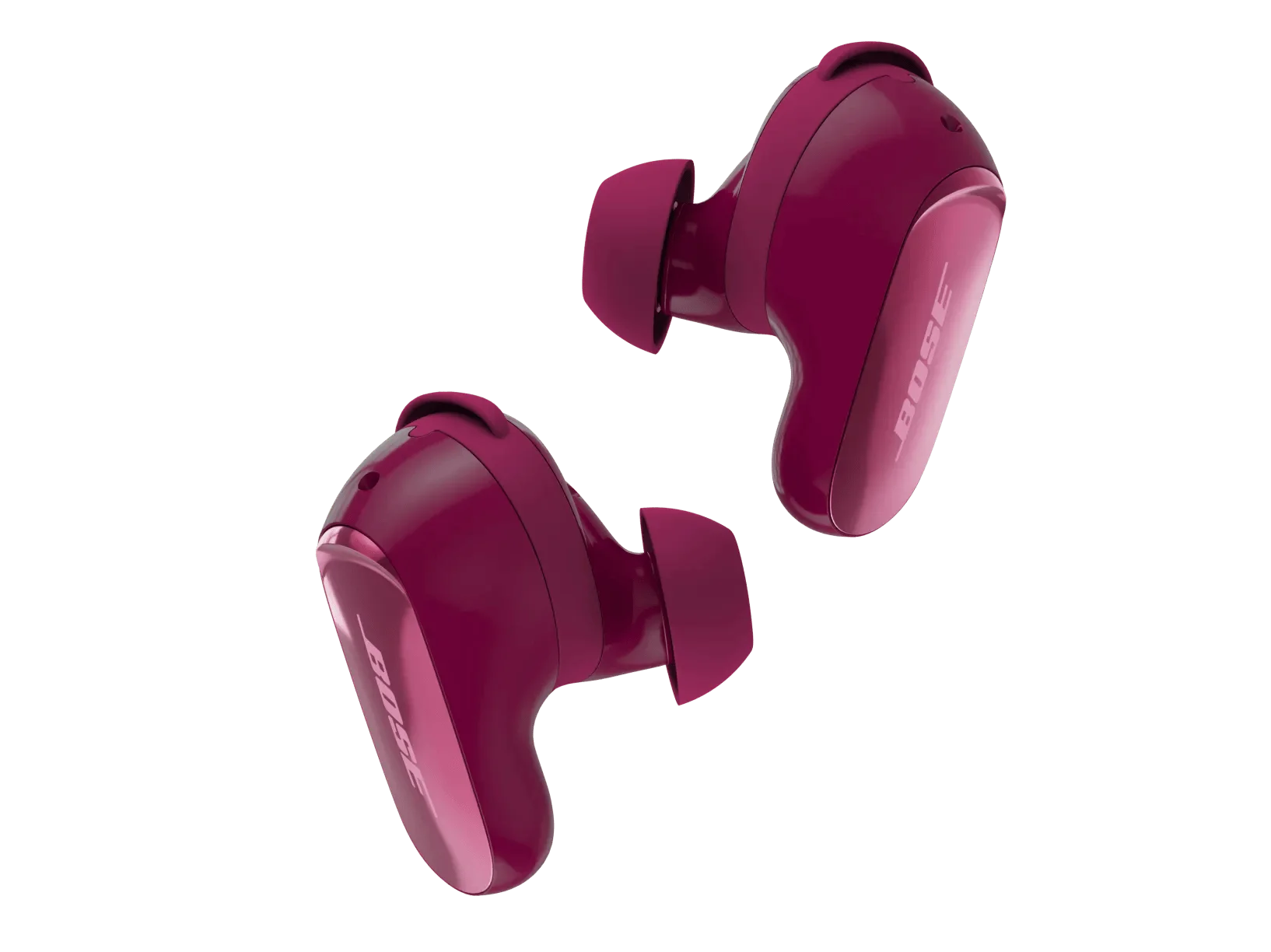
Photo: Bose
Price: $299 | Battery with ANC: 6 hours | Total with case: 24 hours
The Bose QC Ultra Earbuds 2nd Gen scored third in the in-flight ANC test — “roughly the same amount of low-frequency rumble as the AirPods, with the same lower-mid wind noise as the Sonys.” Third place among these three earbuds still means excellent noise cancellation; the difference in practice is small.
Where Bose wins is comfort. The QC Ultra Earbuds ship with three eartip sizes and three silicone wing sizes, giving more fit combinations than either the Sony or Apple earbuds. For travelers whose ears do not cooperate with standard earbuds, this matters — a comfortable fit means you can wear them for an entire long-haul flight without discomfort.
The concern here is battery life: 6 hours with ANC active is shorter than the other two pairs. For most domestic and medium-haul flights, that is fine. For a 12-hour transpacific leg, you need to charge the earbuds once during the flight or use the case. The 24-hour total case capacity means the trip is manageable, but you are thinking about charging more than you would with the AirPods Pro 3.
Released in September 2025 alongside the AirPods Pro 3, the QC Ultra Earbuds 2nd Gen added a wireless charging case and Cinema Mode. At $299, they sit in between the Sony and Apple on price without being the clear winner on any single dimension. The case to buy them: you have tried other earbuds and they always hurt after two hours. Bose’s wing system is the best in the field for fitting difficult ears.
If ANC quality is your only priority and you do not sleep with your head against the window, the Bose QuietComfort Ultra Headphones still outperform all three earbuds. Over-ear cups produce a larger acoustic seal. The Bose over-ears ranked at the top of a separate in-flight test of over-ear headphones for exactly this reason.
Earbuds exist in the travel headphone conversation because of packing size and sleeping position. If neither of those matters to you, the over-ear option is still the better noise cancellation choice.
None of these earbuds work well without a proper seal. A poor fit defeats the ANC — the physical gap lets sound in that the electronics cannot cancel. Before any long flight, test the fit at home:
For the Sony WF-1000XM6 specifically: the foam tips deliver noticeably better ANC than the silicone tips in real-world testing. If you buy the Sonys, order a pack of Sony EP-NI1010 foam tips at the same time. They are not included in the box.
| AirPods Pro 3 | Sony WF-1000XM6 | Bose QC Ultra 2nd Gen | |
|---|---|---|---|
| Price | $249 | $329 | $299 |
| ANC score (in-flight) | 98/100 | 100/100 | 96/100 |
| Battery (ANC on) | 8 hr | 8 hr | 6 hr |
| Total with case | 32 hr | 16 hr | 24 hr |
| Pressure-adaptive ANC | Yes | No | No |
| Wireless charging case | Yes | No | Yes |
| Best for | iPhone users | Android / max ANC | Difficult-to-fit ears |
Compare eSIM coverage, data plans, prices, activation, and limits to choose an eSIM that fits your international trip.
Six offline maps apps compared for travel: Organic Maps, OsmAnd, HERE WeGo, Google Maps, Maps.me, and Gaia GPS. Which one belongs on your phone before you fly.
Verdict: For most travelers, Organic Maps is the app to install first: free, no ads, no tracking, and accurate to within 5 metres on foot. Add HERE WeGo if you are doing a road trip in Europe or the US. Add OsmAnd if you are hiking or cycling off-road. Google Maps offline is a decent backup but not a primary tool.
Real-time translation earbuds tested and ranked for travel: latency, offline support, accuracy, and price. Find the right pair for how you actually travel.
Verdict: For most travelers, the Timekettle W4 Pro ($449) is the only earbud that makes two-way conversation genuinely hands-free — one earbud per person, 0.2-second latency, no tapping required. Budget travelers who just need to get through airports and markets will do fine with the ANFIER M3 ($89.99), which handles 144 languages online and 8 offline for a fraction of the price.