ESIM for International Travel: How to Choose
Compare eSIM coverage, data plans, prices, activation, and limits to choose an eSIM that fits your international trip.
Verdict: For most travelers, the Fujifilm X100VI is the best travel camera, because it packs a 40MP APS-C sensor and a sharp fixed lens into a jacket pocket. If you want one camera that covers every focal length without swapping lenses, the Sony RX100 VII's 24-200mm zoom is the pick instead.
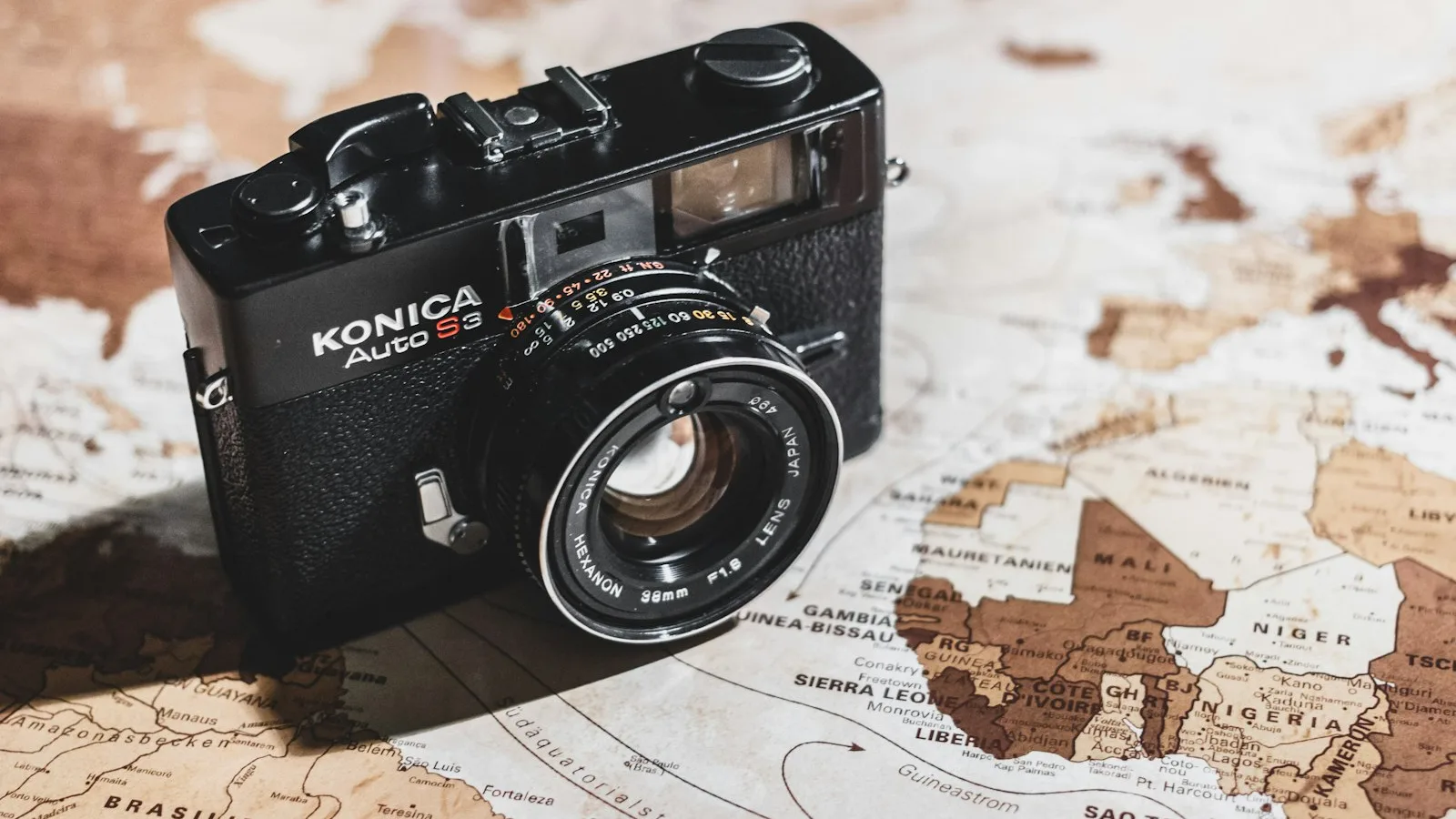
The best travel camera for most people in 2026 is the Fujifilm X100VI, because it packs a 40-megapixel APS-C sensor and a sharp fixed lens into a body you can slip into a jacket pocket. If you would rather have one camera that covers wide-angle to telephoto without ever swapping a lens, the Sony RX100 VII and its 24-200mm zoom is the better fit. The right pick comes down to a single question: do you value image quality most, or do you value never missing a shot because you had the wrong lens?
Every camera here is a real travel tool, not a compromise. What separates them is the trade between sensor size (which drives image quality) and how much gear you carry to get every focal length. This guide sorts them by who each one is actually for.
Some links in this article are affiliate links. If you buy through them, we earn a small commission at no extra cost to you. We only recommend cameras we would actually pack. Prices below reflect brand MSRPs live on August 17, 2026, and street prices vary, so confirm before you buy.
Two specs decide most of this, and they pull against each other.
Sensor size and resolution. A bigger sensor gathers more light and delivers cleaner images, especially at dusk or indoors. The cameras here range from a 1-inch sensor (the pocket zooms) up to APS-C (the Fujifilm, Ricoh, and Sony a6700), which is several times larger. More resolution also means more room to crop, which matters when you cannot walk closer to a subject.
Portability versus flexibility. A fixed-lens camera like the Fujifilm or Ricoh is smaller and simpler, but you are locked to one focal length. A zoom compact like the RX100 VII covers everything in one body. An interchangeable-lens camera like the a6700 gives the best quality and the most options, but you carry lenses. Pick the trade that matches how you travel.
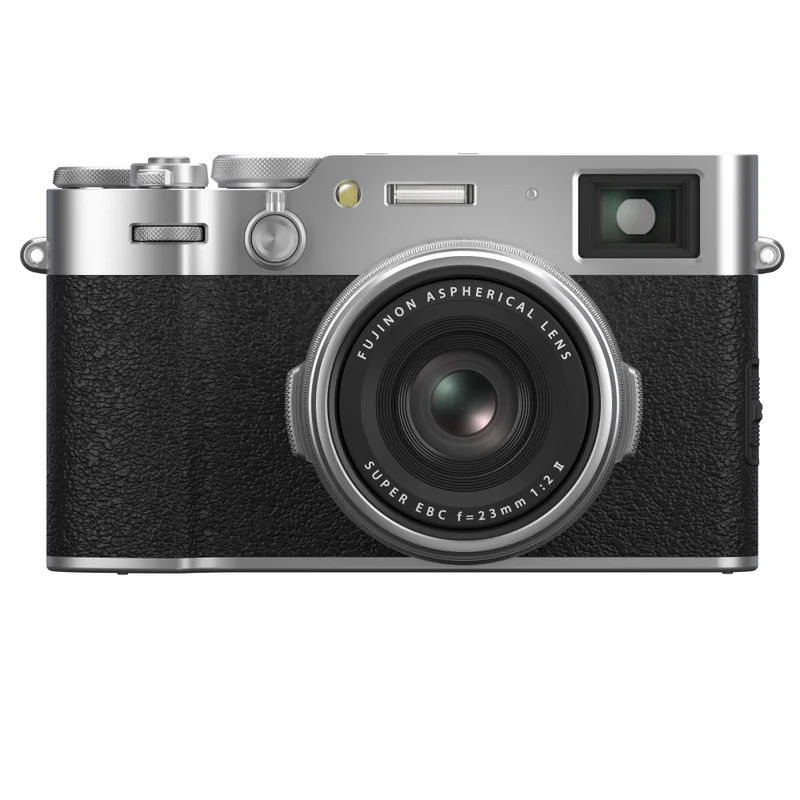
Photo: Fujifilm
This is the travel camera to beat, because it delivers the best image quality of the group in the most pocketable serious body. It has a 40.2-megapixel X-Trans CMOS 5 HR APS-C sensor, the largest and highest-resolution sensor here, paired with a fixed 23mm F2 lens (a 35mm-equivalent field of view) that is sharp corner to corner. For the first time in the X100 line, it adds up to 6.0 stops of in-body image stabilization, which makes handheld low-light shots on the road far more forgiving, plus a built-in 4-stop ND filter and 6.2K/30P video.
DPReview describes it as combining “a stabilized 40MP APS-C sensor with a 35mm equiv F2 lens,” and notes the whole X100 line’s long reputation as a travel and street camera, well suited to creators who want “something small, quiet and reliable.” That is exactly the job here.
The honest negatives. The 35mm-equivalent focal length is fixed, so there is no zoom; you move your feet or you crop. And it commands a premium at $1,599.95 (a Limited Edition runs $1,999.95). But for a single grab-and-go camera where image quality matters most, nothing else here matches it.
The RX100 VII is the pick for the traveler who wants one camera that handles every focal length without a single lens change. Its 20.1-megapixel 1-inch stacked sensor pairs with a ZEISS 24-200mm-equivalent F2.8-4.5 zoom, an 8.3x range that covers a sweeping landscape and a distant rooftop from the same spot, all in a body that genuinely fits a pocket at around 302 grams. It also carries Sony’s fast Real-time Tracking and Eye AF (a 0.02-second autofocus claim) and shoots 4K HDR video.
DPReview called it “the most capable pocket camera currently on the market” and, specifically for this use, wrote that “with its small size and versatile lens, the RX100 VII is a great travel camera.” That versatility is the entire reason to choose it over the sharper-but-fixed Fujifilm.
The honest negatives. The 1-inch sensor is smaller than the Fujifilm’s or the a6700’s APS-C chip, so image quality in dim light is a step behind, and DPReview flags that the modest maximum aperture “limits dim-light use.” It is also not cheap: Sony’s launch MSRP was $1,200 and it typically sells around $1,299 to $1,398 today. Note that Sony’s official product pages block automated checks, so confirm current pricing and stock directly on Sony’s site.
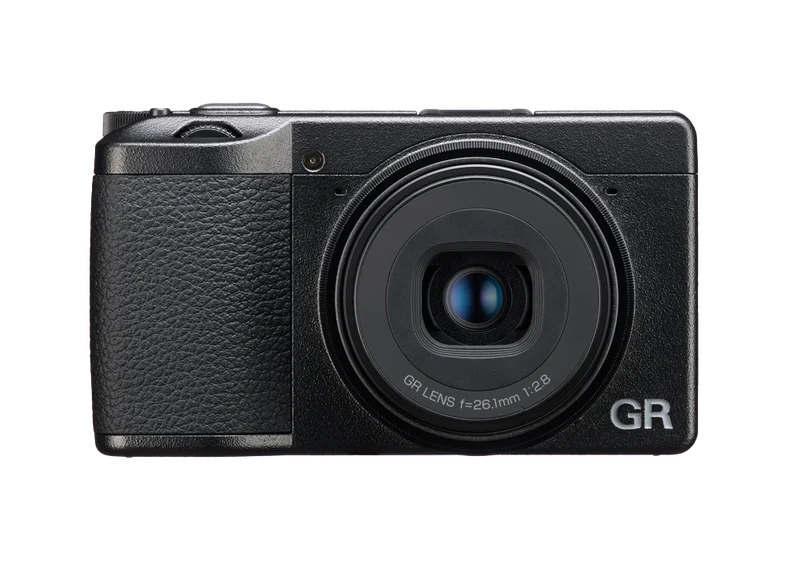
Photo: Ricoh Imaging
The Ricoh GR IIIx HDF is the pick for the traveler who wants genuine APS-C image quality in the smallest possible pocket. It has a roughly 24-megapixel APS-C sensor behind a 26.1mm lens (about 40mm-equivalent) and weighs just 262 grams with battery and card. This HDF version adds a built-in Highlight Diffusion Filter for softer, glowing highlights, and the body includes in-camera Shake Reduction. It is the most truly pocketable APS-C camera made.
TechRadar praised its “unparalleled pocketability, quick response, intuitive handling and sharp-looking DNG raws,” and called its 40mm-equivalent lens “arguably more versatile” than the wider standard GR, rating it “one of the best compact cameras” for street shooting.
The honest negatives. Battery life is weak (TechRadar flags it as the main concession), so carry a spare. Video is limited to Full HD, not 4K, so this is a stills camera first. And like the Fujifilm, its lens is fixed. The GR IIIx HDF lists at $1,349.95, though Ricoh’s own store often has the standard GR IIIx and open-box units for meaningfully less.
The Sony a6700 is the pick for the traveler who wants the best long-term system, one that grows with lenses and doubles as a serious video camera. It has a 26-megapixel APS-C sensor with in-body stabilization, an AI-processing autofocus unit with 759 points and subject recognition, and it shoots 4K up to 120p with 10-bit color and S-Log3. Because it uses Sony’s E-mount, you can start with the bundled 16-50mm zoom and add fast primes or telephotos as your trips demand.
DPReview found it “as well-suited for portraiture and landscape as it is for travel vlogging and filmmaking,” with image quality, video, and autofocus that are “top-notch, better than or on par with the best.” The enormous E-mount lens selection is the practical advantage over every fixed-lens camera here.
The honest negatives. It is an interchangeable-lens body, so it is larger to pack and you carry glass, which is the opposite of the grab-and-go appeal of the Fujifilm or Ricoh. Pricing starts at $1,399 body-only, $1,499 with the 16-50mm, or $1,799 with the 18-135mm, so a travel-ready kit costs more than the sticker. As with the RX100 VII, Sony’s product page blocks automated checks, so verify current price and availability on Sony’s site.
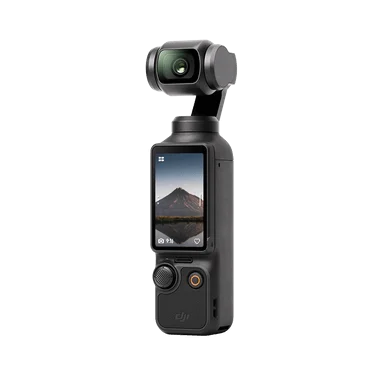
Photo: DJI
The DJI Osmo Pocket 3 is the pick for the traveler whose priority is video, not stills. It is a 179-gram gimbal camera with a 1-inch sensor and a fixed 20mm-equivalent F2.0 lens, and its three-axis mechanical gimbal delivers smoother footage than any handheld camera here can. It shoots 4K up to 60fps, slow motion up to 240fps, has a rotatable 2-inch touchscreen that flips between portrait and landscape, and packs three built-in microphones with subject tracking.
TechRadar summed it up as “amazing video quality and beautiful slow-motion,” crediting the 1-inch sensor for improved low-light footage and the portrait mode for social clips, concluding that “if you can stomach the price tag, you won’t be disappointed.”
The honest negatives. It is a video-first tool; its single-shot still photos (around 9 megapixels) are not in the same league as the stills cameras above, so it complements a photo camera rather than replacing one. Pricing was not listed on DJI’s spec page at the time of writing; historically the Standard combo runs around $519 and the Creator Combo around $669, so confirm the current figure on DJI’s store page.
Compare eSIM coverage, data plans, prices, activation, and limits to choose an eSIM that fits your international trip.
Six offline maps apps compared for travel: Organic Maps, OsmAnd, HERE WeGo, Google Maps, Maps.me, and Gaia GPS. Which one belongs on your phone before you fly.
Verdict: For most travelers, Organic Maps is the app to install first: free, no ads, no tracking, and accurate to within 5 metres on foot. Add HERE WeGo if you are doing a road trip in Europe or the US. Add OsmAnd if you are hiking or cycling off-road. Google Maps offline is a decent backup but not a primary tool.
Real-time translation earbuds tested and ranked for travel: latency, offline support, accuracy, and price. Find the right pair for how you actually travel.
Verdict: For most travelers, the Timekettle W4 Pro ($449) is the only earbud that makes two-way conversation genuinely hands-free — one earbud per person, 0.2-second latency, no tapping required. Budget travelers who just need to get through airports and markets will do fine with the ANFIER M3 ($89.99), which handles 144 languages online and 8 offline for a fraction of the price.