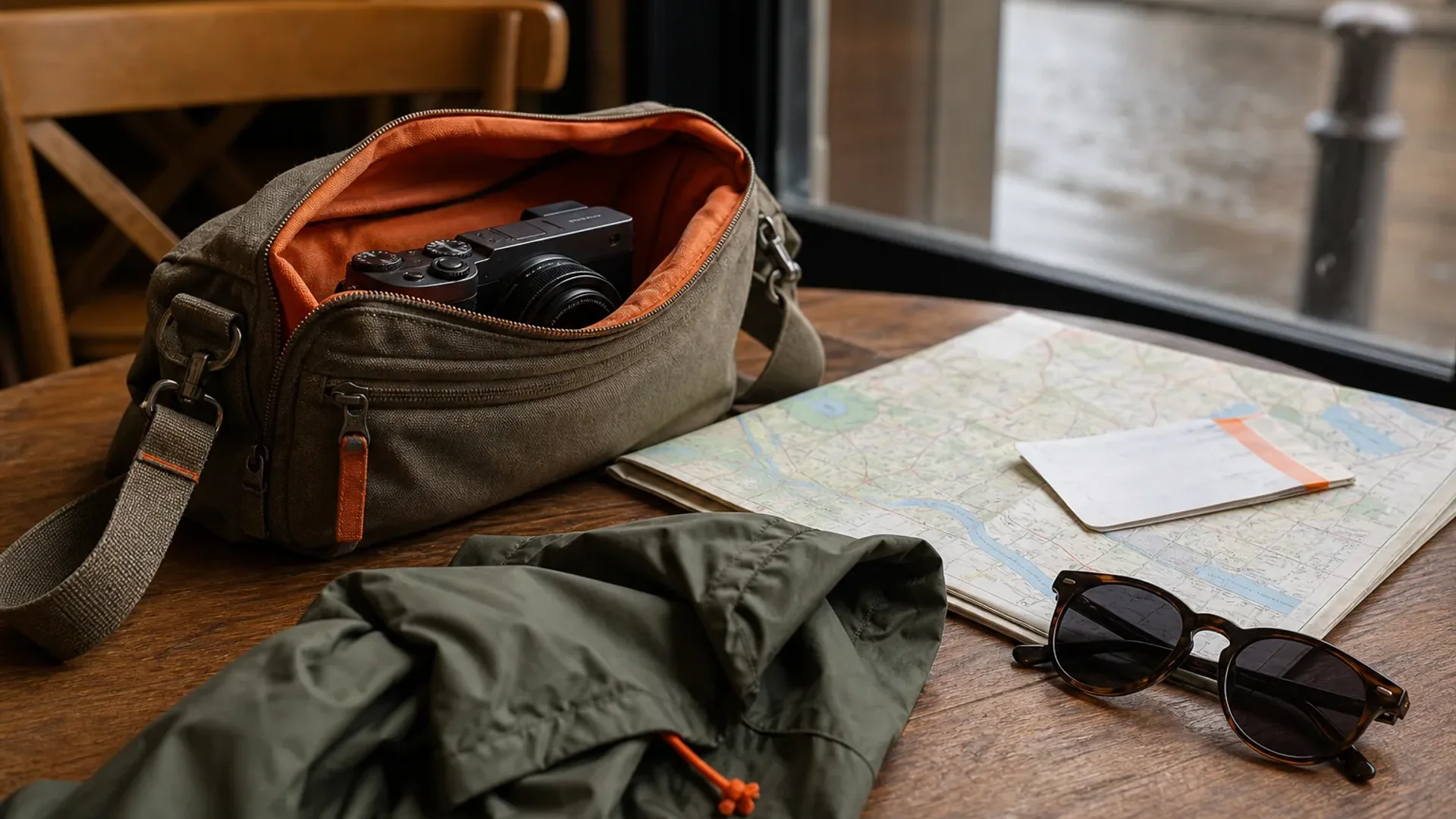
The best travel cameras for beginners aren’t always the ones with the most megapixels. Weather sealing and image stabilization can matter more when you’re caught in rain or shooting after sunset. We use this five-step test to help you choose a camera you’ll carry, learn, and still enjoy after the trip.
Step 2: Choose a Compact Camera You Will Actually Carry
Compact cameras make sense for beginners who want better control than a phone without carrying a full system. Size is the main advantage, but fixed lenses and short zoom ranges can shape what you shoot.
The Fujifilm X100VI uses an APS-C sensor, 40MP, and a fixed 23mm lens, which gives a 35mm equivalent view. That fixed view works well for streets, food, family scenes, and general travel. It also means you can’t zoom in on a distant detail. You have to move, crop, or accept the wider frame.
The Ricoh GR III uses an APS-C sensor with a 28mm equivalent lens. The Ricoh GR IIIx uses a 40mm equivalent lens. The first suits wider street scenes. The second gives a tighter view for portraits and details. The Ricoh GR IV is listed with image stabilization, but it is not weather-sealed, so rain still calls for care.
If you want one small camera with a broad zoom range, the Sony RX100 VII is easier to place. Its 1-inch sensor produces 20MP files, while its 24 to 200mm equivalent zoom covers wide scenes and distant subjects. It also has image stabilization. A camera like this can handle a market stall in the morning and a far-off monument later without changing lenses.
The Leica D-Lux 8 uses a Micro Four Thirds sensor and a 24 to 75mm equivalent zoom. Its listed starting price is $1,595, yet it has 17MP. That is a useful reminder that price and megapixel count do not move together. A higher price may reflect design, controls, lens quality, or build choices.
Compact type
What it gives you
What you give up
Fits this traveler
Fixed 23mm lens
Simple setup and a wide everyday view
No optical zoom
Street scenes and family trips
Fixed 28mm or 40mm lens
Small body with a clear shooting style
Less flexible framing
Travelers who know their preferred view
24 to 200mm zoom
One lens for wide and distant subjects
Smaller sensor than many system cameras
Tour days with mixed subjects
24 to 75mm zoom
Useful range in a compact body
Higher listed starting price and fewer pixels
Travelers who value controls and design
Sensor size affects how a camera gathers light and handles depth of field. The terms can sound technical, but the basic point is simple: sensor format is one reason two cameras with similar pixel counts can behave differently. Wikipedia’s explanation of image sensor formats gives the background without turning the choice into a physics lesson.
Our rule is blunt. Skip a compact camera if you already know you want wildlife reach or lens control. Choose one if the biggest risk is leaving a larger kit in the hotel room.
Step 3: Pick an Interchangeable-Lens Camera for More Room to Grow
Interchangeable-lens cameras suit beginners who want to learn photography and keep options open. The body is only the start. The lens you carry will shape the size, cost, and feel of every travel day.
The Canon EOS R100 has a 24.1MP APS-C sensor and no listed in-body image stabilization. It can make sense as a first system camera if you want a simple entry point and plan to learn with one kit lens. The limitation is easy to miss: handheld shots in dim rooms may need steadier technique or a faster lens.
The Nikon Z50 II records 4K video. It is a sensible path for someone who wants a camera that can handle stills while learning video. If you already own lenses in a system, staying with that system can save you from replacing useful glass. Lens cost often changes the budget more than the body does.
The Canon EOS R50 uses a 24MP APS-C sensor. The Sony ZV-E10 also uses an APS-C sensor, which gives both cameras a larger sensor class than the compact models with 1-inch sensors. The right pick depends on how you plan to shoot, since the body name alone doesn’t tell us how comfortable the controls will feel in your hands.
For more demanding hybrid work, the Fujifilm X-S20 lists 26MP, image stabilization, and 6.2K video. Those figures give you more headroom, but they don’t make it the right first camera for everyone. A bigger feature set can mean more menus, more settings, and a higher cost before you know what you need.
The OM SYSTEM OM-5 lists image stabilization and weather sealing. Those two details matter for hikers and travelers who expect wet conditions. Still, check what the lens adds to the protection. A sealed body does not mean you should treat the whole kit like underwater gear.
The Nikon Z30 lists 4K video and may suit someone who puts clips ahead of still photography. We would not buy a camera for a video label alone. Hold it. Check the screen. See if you can start recording without hunting through a menu.
Mirrorless cameras use an electronic viewfinder or screen to show the scene before you shoot. That can help beginners see exposure changes as they work, but the benefit depends on whether the controls feel clear. The basic mirrorless camera design is less important than the habit it supports: you can change lenses when your subject changes.
Pro Tip: Price the body with the lens you will carry, one spare battery, and a memory card. A low body price can become a costly kit once the useful lens arrives.
Choose this route when you want to photograph the same trip in different ways over time. Choose a compact instead if buying lenses sounds like homework.
Step 4: Check the Tradeoffs Beginners Often Miss
The best travel cameras for beginners can still frustrate you if you skip the small details. Check stabilization, weather protection, battery access, controls, and the weight of the full kit.
Image stabilization helps reduce blur from camera movement. It doesn’t freeze a moving child or cyclist. It helps most when your subject stays fairly still and the light is low. Only a minority of the researched models list built-in stabilization, so look for the exact feature rather than assuming it is included.
Weather sealing is even less common. Even then, read the maker’s conditions. A sealed body may need a compatible lens, adapter, or filter before the setup has the protection you expect.
Zoom creates a second tradeoff. A broad range can save you from changing lenses, but a fixed lens can keep the camera smaller and the shooting style simpler. The Fujifilm X100VI uses a fixed 23mm lens. The Sony RX100 VII covers 24 to 200mm. Neither is wrong. They ask different things from you.
Video adds another test. A camera may record 4K or 6.2K, yet still be awkward to hold while walking. Watch a short handling demo, then check whether the screen position works for your height. The guides won’t tell you how annoying a button feels after six hours.
Weight data is often missing from comparison pages. That gap matters. The body may look small online, but the lens, spare battery, strap, and bag decide what you actually carry.
Make a short skip list before you buy. Skip a fixed lens if your trip depends on distant wildlife. Skip an unsealed kit if you won’t protect it from rain. Skip a large system if you already know it will stay in your room.
Step 5: Test Your Shortlist Before Buying Accessories
Testing a shortlist takes one afternoon and can prevent a costly mismatch. Don’t buy filters, bags, or extra lenses until the camera passes a few simple checks.
First, hold each body in your normal grip. Can you reach the shutter without shifting your hand? Can you change the exposure setting while looking through the viewfinder? Try the screen at waist level. Travel photos happen while standing in crowds, sitting on trains, and moving fast.
Next, photograph the same subject in three places: a bright outdoor scene, a dim indoor corner, and a moving person. You aren’t trying to win a photo contest. You’re checking whether autofocus, stabilization, and controls make sense under pressure.
Then review the files on your phone. Check how long the transfer takes. See if the colors look good before editing. A camera that produces files you enjoy sharing may beat a more advanced body that needs an evening at a desk.
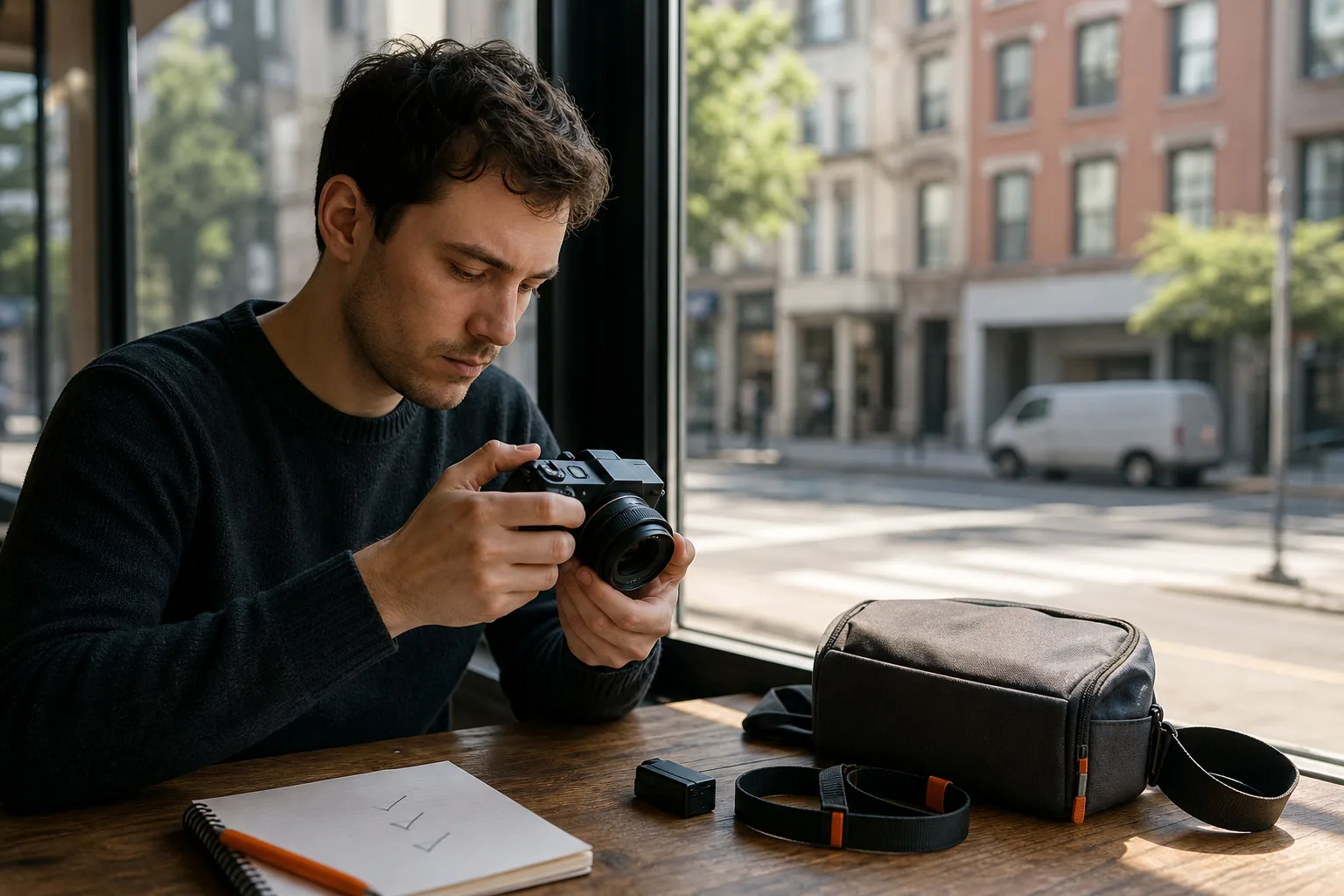
Test the travel parts too. Open the battery door with the camera inside its small bag. Remove the memory card. Attach and remove the lens without looking down. If a step feels fiddly at home, it will feel worse at an airport gate.
We also recommend checking the maker’s current specification page before paying. Online comparison pages often leave out price, weight, and video details.
Once the camera passes, buy only what protects the trip. A spare battery is more useful than a shelf of filters. A simple bag may be better than a large camera backpack if you spend the day on foot.
For a trip with several long walking days, pair this camera check with a travel insurance comparison that explains coverage and exclusions. Gear and cover solve different problems, but both belong in the same pre-trip budget.
FAQ: Best Travel Cameras for Beginners
What is the best travel camera for a beginner?
The best travel camera for a beginner is the one you will carry and understand. Choose a compact for low weight and simple shooting. Choose an interchangeable-lens model if you want to learn through different lenses. Start with your trip and subject, then compare sensor size, stabilization, weather protection, and the full kit cost.
Is a compact camera better than a mirrorless camera for travel?
A compact camera is better when size and simplicity decide whether you take photos. A mirrorless camera is better when you need lens choice or want more room to grow. The Sony RX100 VII gives a wide zoom range in a small body, while APS-C mirrorless models give you a larger sensor class and lens flexibility.
Do beginners need weather sealing on a travel camera?
Beginners don’t always need weather sealing, but it is useful for wet trips and outdoor days. Check the whole setup, since the lens or adapter may affect protection. A rain cover and careful handling still matter.
How many megapixels should a travel camera have?
Most beginners should treat megapixels as one factor, not the deciding factor. The researched cameras range from 17MP to 40MP, yet the 17MP Leica D-Lux 8 has a listed starting price of $1,595. Sensor size, lens quality, stabilization, and your editing habits may affect your results more.
Is it worth buying a camera instead of using a phone?
A dedicated camera is worth it when you want better low-light control, optical reach, real depth of field, or large prints. A phone is enough for quick sharing in good light. If you can’t name the camera task your phone fails at, keep the phone and spend the money on the trip.
The Camera I Would Pack First
I recommend choosing the smallest camera that meets your main need. For many first-time travelers, that means a compact with a useful fixed lens or zoom. If you want to learn lenses, look at an APS-C mirrorless kit instead. Write your one-line camera brief, test two or three bodies in person, then let the camera earn its place in your bag.
Airalo vs Holafly compared on real USD prices for Japan, Thailand, and Vietnam, daily data caps, hotspot rules, and who each eSIM is right for.
Verdict: Buy Airalo for most trips: it was cheaper than Holafly on every unlimited duration we checked in Japan, Thailand, and Vietnam, it sells fixed-GB plans that cost far less for light use, and it publishes its daily full-speed cap. Buy Holafly only if you want unlimited data sold by the exact day, from 1 to 90 days, and accept paying from $0.50 to about $25 more.
Airalo vs Saily compared on live prices, coverage, calls, apps, support, and Trustpilot scores, with a clear pick for each kind of trip.
Verdict: Airalo is the better default because its prices match Saily's almost to the cent and it adds calls and SMS plans, 3 to 365 day validity, and wider regional coverage. Saily is the better pick if you want a single reusable eSIM, faster in-app support, and a much higher Trustpilot score (4.7 against 4.1).
Anker power bank review for travelers: Laptop 25K 165W, Prime 26K 300W, MagGo 10K Slim and Nano 5K compared by weight, price, Wh, and the recall list.
Verdict: For most travelers carrying a laptop, the Anker Laptop Power Bank (25K, 165W) is the Anker to buy, because it pairs 92.5Wh of capacity with two built-in cables for $119.99. If you only charge an iPhone, buy the MagGo 10K Slim or the Nano 5K instead.