Airplane Phone Holder: The $15 Gadget That Fixes Neck Cramp on Every Flight
Verdict:The Perilogics Universal In-Flight Holder ($13.99) is the airplane phone holder to buy: it clamps to the tray table, the seat pocket, or the tray in its stowed position, rotates 360 degrees in two axes, and weighs nothing. The Flight Flap Pro ($16.99) is the better pick if you refuse moving parts, since it is a fold-flat aluminum and neoprene wedge that props a phone or small tablet at eye-friendly angles. Both cost less than one airport sandwich.
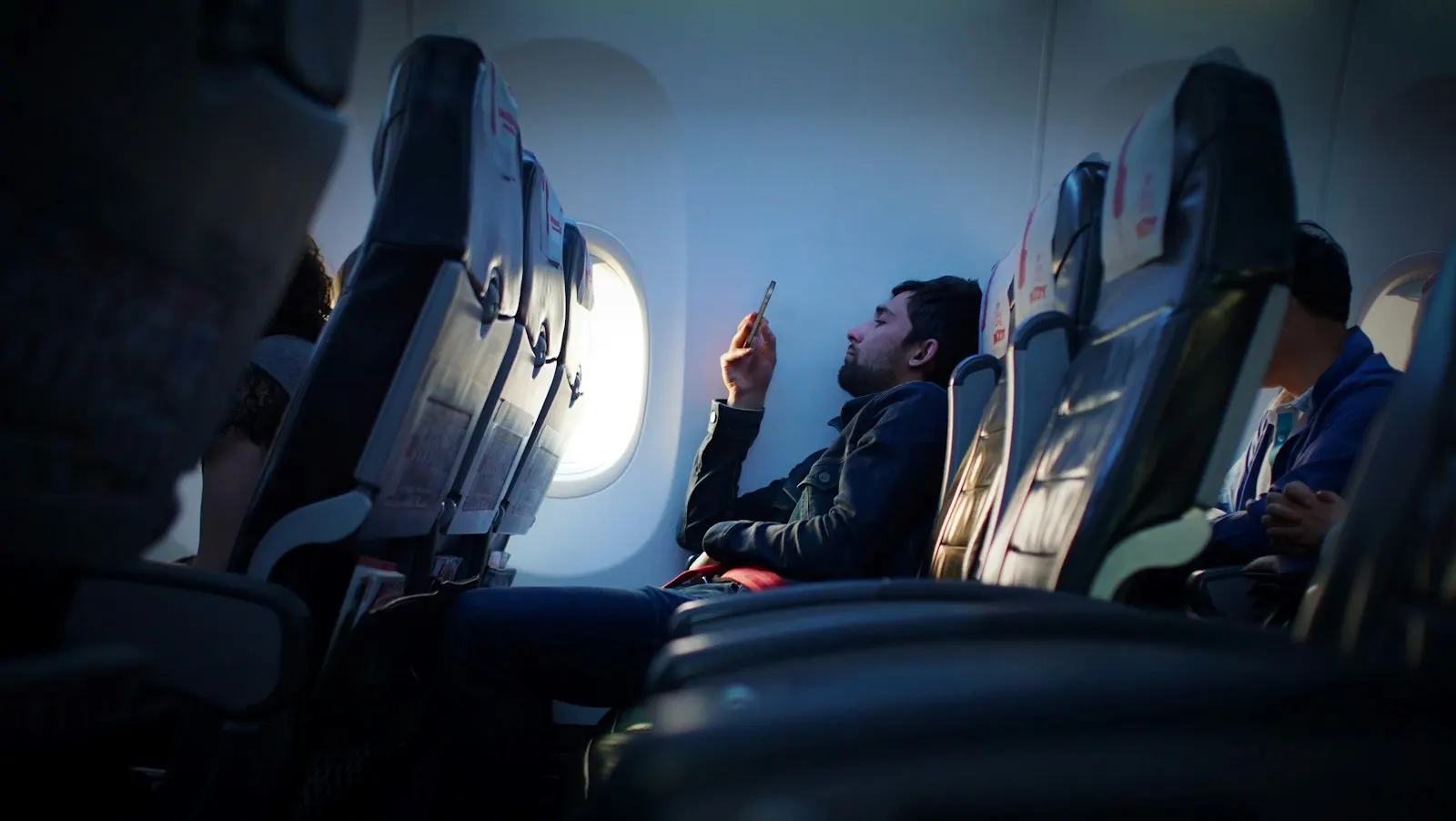
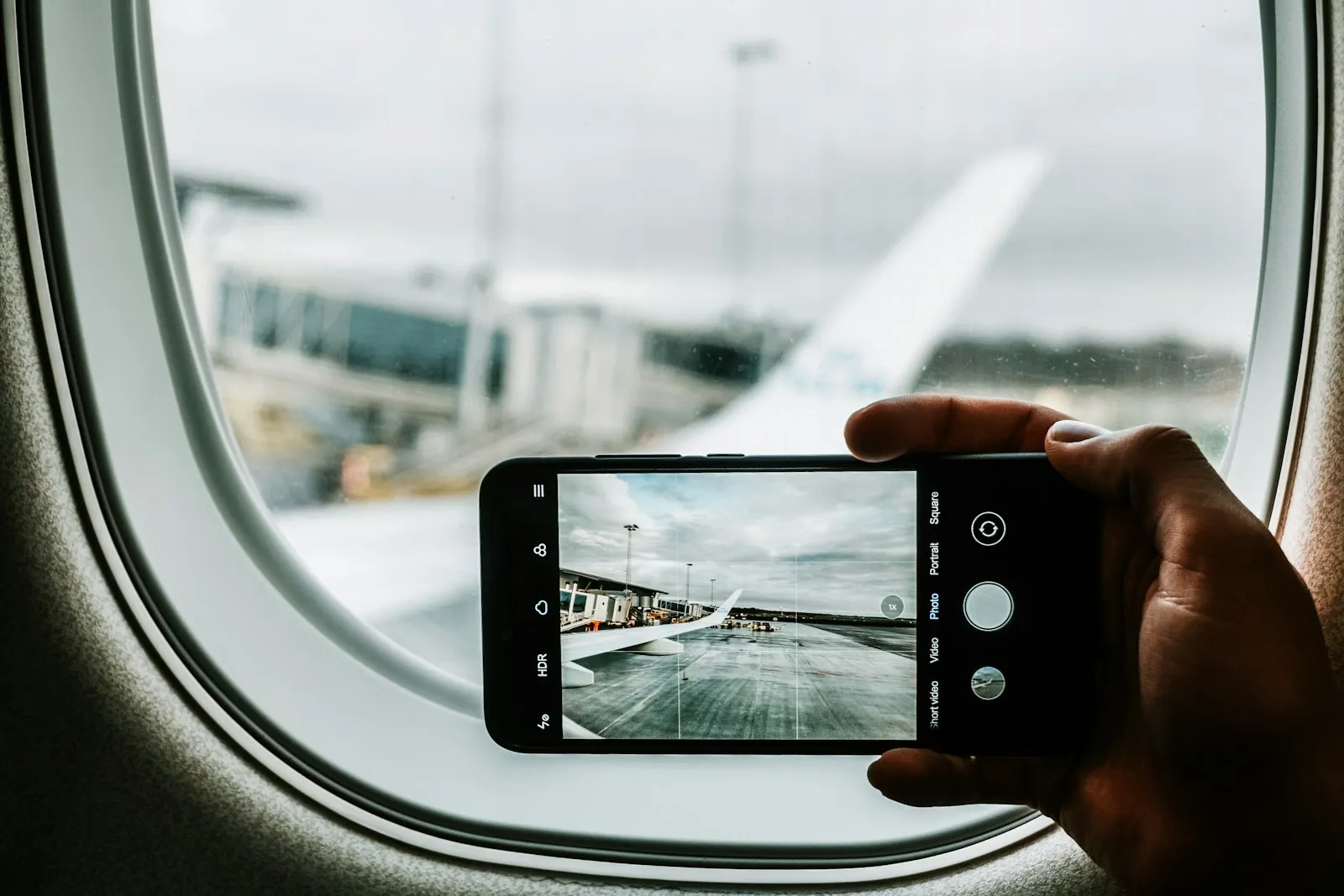
Airlines quietly removed seatback screens from a huge share of domestic fleets and replaced them with “bring your own device” entertainment, which really means “hold your phone in your hand for five hours.” An airplane phone holder is the whole fix: it mounts the phone at eye level, frees both hands, and folds away smaller than a passport. After the noise cancelling earbuds, it is the best under-$20 upgrade in air travel.
Two designs dominate, a clamp and a wedge, and they win in different situations.
Some links in this article are affiliate links. If you buy through them, we earn a small commission at no extra cost to you. We only link to products we would actually recommend.
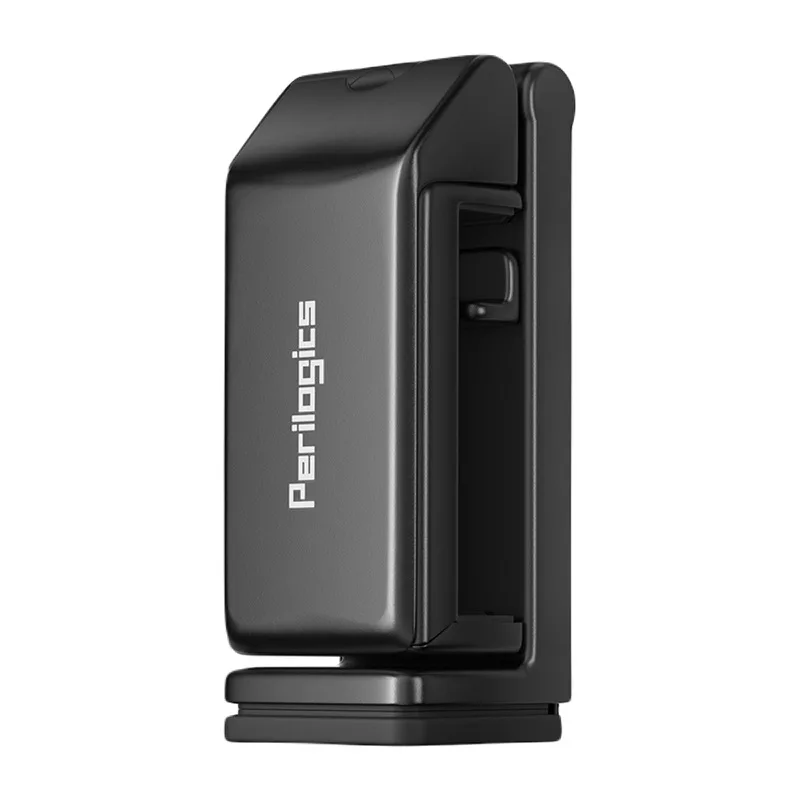
This is the pick for most flyers, and it has become the default airplane mount for a reason. The design is a spring clamp with a phone cradle on a two-point rotating joint. Clip it to the top edge of the stowed tray table and your phone hangs at eye level with the tray still locked, which matters during meal service, during the drink pass, and in basic economy seats where lowering the tray means surrendering your knees. It also clamps to the lowered tray’s lip, the seat pocket edge, and surfaces up to roughly 1.5 inches thick, and the dual 360-degree rotation means portrait or landscape at any angle. It fits phones from mini-sized up through the largest Max and Ultra models, case on. Perilogics sells it for $13.99, with a 2.0 version at $15.99.
The honest negatives, consistent across long-term reviews like MountGuys’ testing: the all-plastic joints feel stiff and loud when you snap them, and the clamp needs an edge to bite, so the rare seatback with a fully recessed tray latch and no pocket lip defeats it. It is a travel tool, not a jewel.
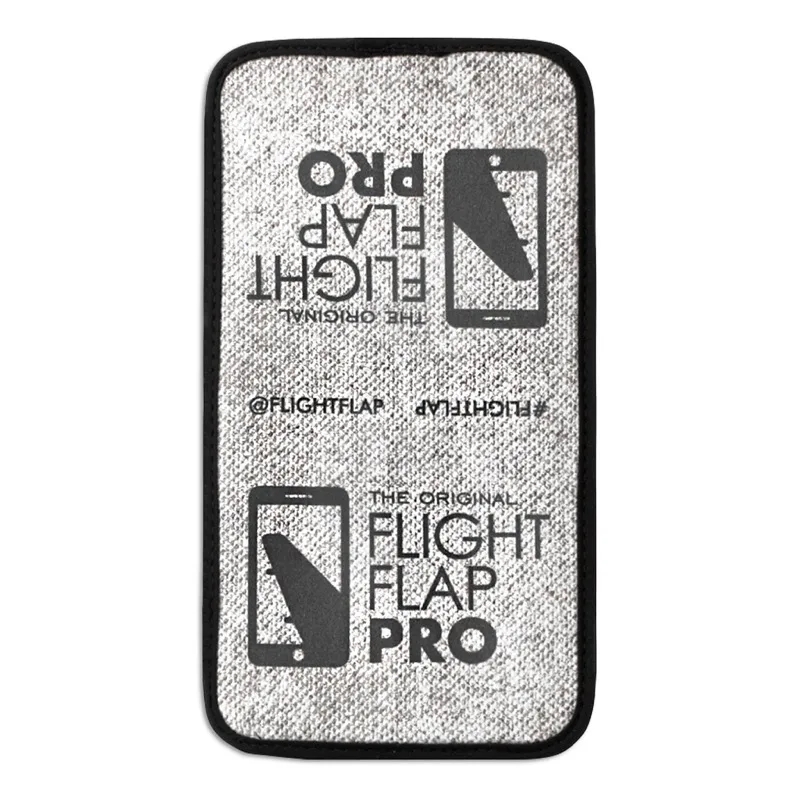
This is the pick if you want zero mechanisms. The Flight Flap is a flexible flap, a thin aluminum core wrapped in soft material, in the Pro version reinforced neoprene with stitched edges. You bend it into a wedge, set it on the tray table, and lean the phone against it at whatever angle your neck prefers, or hook it over the stowed tray and let the phone rest in the fold. Done. It folds dead flat, slides into a laptop sleeve or a seat pocket, weighs about an ounce, and has no clamp to break and no joints to loosen. The Pro runs $16.99 direct from Flight Flap, with the original fabric version at $11.99 and an XL for full-size tablets.
The honest negatives: it mostly wants a surface, so during meal service with the tray in use, the clamp design above keeps working while the Flight Flap waits. And because the phone rests against it rather than locking in, heavy turbulence can topple the setup, which clamp owners never think about.
Pick by how you actually sit on a plane. If your tray table stays stowed and you watch at eye level, the Perilogics clamp is the better machine, and at $13.99 it is the default recommendation. If you watch on a tray with snacks around, use a tablet sometimes, or just want the thing that cannot break, the Flight Flap Pro earns its spot. Frequent flyers we know carry both, because together they weigh less than a granola bar and cover every seat configuration in the sky.
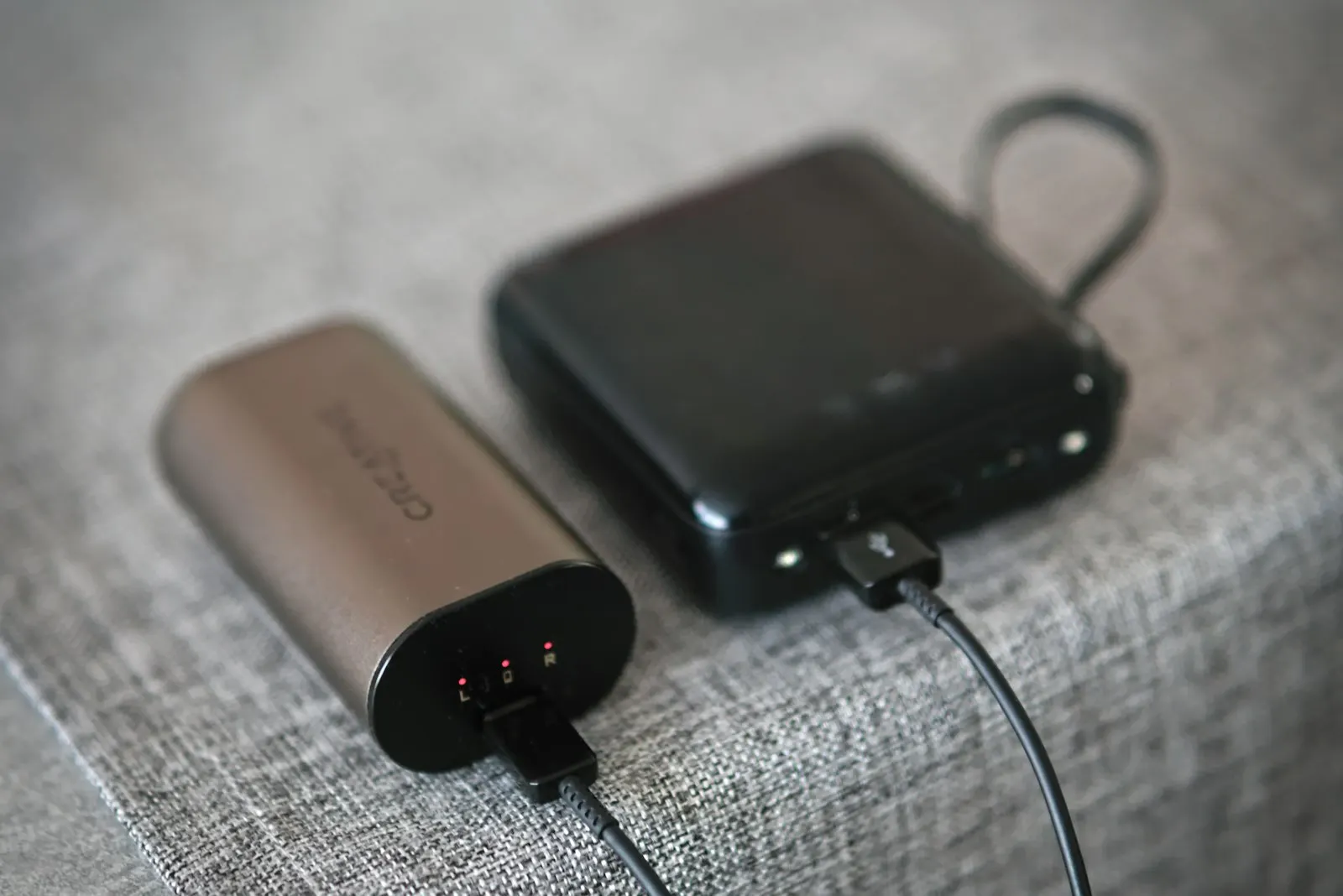
Three small boarding habits complete the setup. Download your media before the flight, because in-flight wifi costs real money and streams badly. Start the flight with a full power bank, since BYOD airlines still under-deliver on seat power. And if your phone lives in a chunky waterproof case from our waterproof case guide, test the holder’s grip at home first, because maximum-thickness cases are the one fit problem both designs share.
Airalo vs Holafly compared on real USD prices for Japan, Thailand, and Vietnam, daily data caps, hotspot rules, and who each eSIM is right for.
Verdict: Buy Airalo for most trips: it was cheaper than Holafly on every unlimited duration we checked in Japan, Thailand, and Vietnam, it sells fixed-GB plans that cost far less for light use, and it publishes its daily full-speed cap. Buy Holafly only if you want unlimited data sold by the exact day, from 1 to 90 days, and accept paying from $0.50 to about $25 more.
Airalo vs Saily compared on live prices, coverage, calls, apps, support, and Trustpilot scores, with a clear pick for each kind of trip.
Verdict: Airalo is the better default because its prices match Saily's almost to the cent and it adds calls and SMS plans, 3 to 365 day validity, and wider regional coverage. Saily is the better pick if you want a single reusable eSIM, faster in-app support, and a much higher Trustpilot score (4.7 against 4.1).
Anker power bank review for travelers: Laptop 25K 165W, Prime 26K 300W, MagGo 10K Slim and Nano 5K compared by weight, price, Wh, and the recall list.
Verdict: For most travelers carrying a laptop, the Anker Laptop Power Bank (25K, 165W) is the Anker to buy, because it pairs 92.5Wh of capacity with two built-in cables for $119.99. If you only charge an iPhone, buy the MagGo 10K Slim or the Nano 5K instead.