Best Laptop Backpack for Travel: Three Bags That Protect Your Computer and Survive the Overhead Bin
Verdict:The Aer Travel Pack 4 35L ($259) is the laptop backpack to buy if the bag is your whole luggage: a suspended 16-inch laptop pocket, lay-flat packing, and 1680D ballistic nylon that shrugs off years of overhead bins. If you want a lighter bag that moonlights as a daypack, the Peak Design Travel Backpack 30L ($229.95) is the better shape. If you just need your laptop through security with minimum fuss and minimum spend, the SwissGear 1900 ScanSmart ($99) has been the TSA-line workhorse for a decade.
A laptop backpack for travel has a harder job than a laptop backpack for commuting. It has to protect the computer from the specific abuse of flying: the drop into the underseat space, the squeeze into a full overhead bin, the sprint across a connection with the bag bouncing on your back. Most “laptop backpacks” are office bags with a padded sleeve. The three below are travel bags first, and each one wins for a different kind of flyer.
Some links in this article are affiliate links. If you buy through them, we earn a small commission at no extra cost to you. We only link to products we would actually recommend.
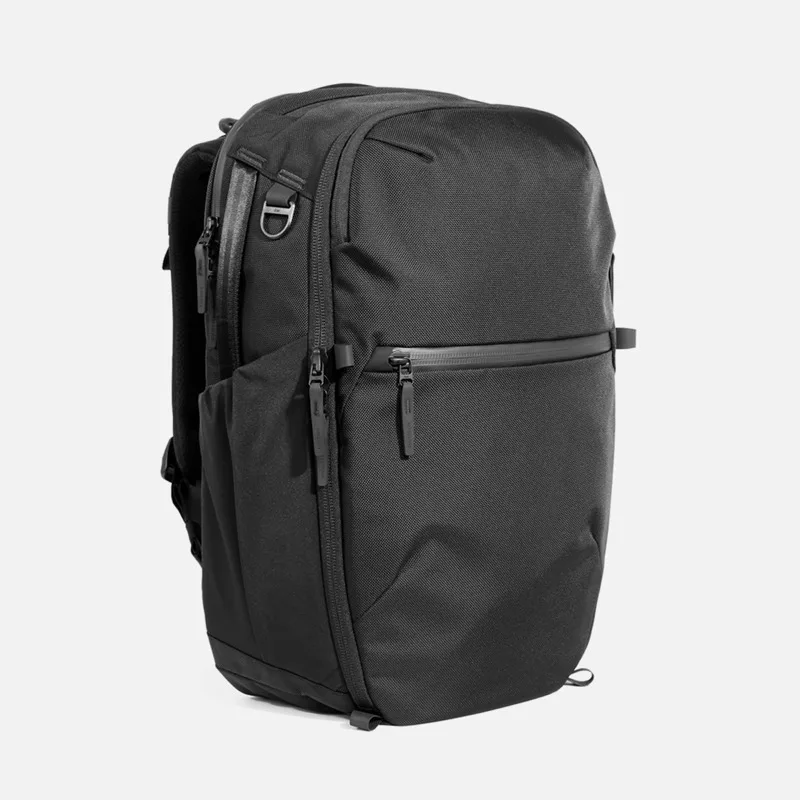
This is the pick if the backpack is your entire luggage. The Travel Pack 4 is the fourth generation of Aer’s one-bag flagship, and the laptop carry is the best in this group: a padded, suspended pocket with a soft lining that fits up to a 16-inch laptop, sitting in its own compartment against your back where the weight belongs. Suspended matters. When the bag hits the floor, the laptop does not touch the bottom.
The travel details are the reason it costs $259. The main compartment opens flat like a suitcase, the zippers are lockable YKK, there are dual water bottle pockets, a luggage handle pass-through, load lifters, and a hidden pocket sized for an AirTag or other tracker. The shell is 1680D Cordura ballistic nylon, which is the fabric you pick when you want the bag to outlast the laptop. At 21.5 by 13.5 by 9 inches it stays inside most carry-on limits.
The honest negative is weight. At 3.90 lbs empty it is the heaviest bag here before you pack a single sock, and packed to its full 35 liters it is a dense load on your shoulders, because there is no real hip belt included (Aer sells attachment points for one). If you mostly travel with a roller and want a lighter personal item, this is more bag than you need.
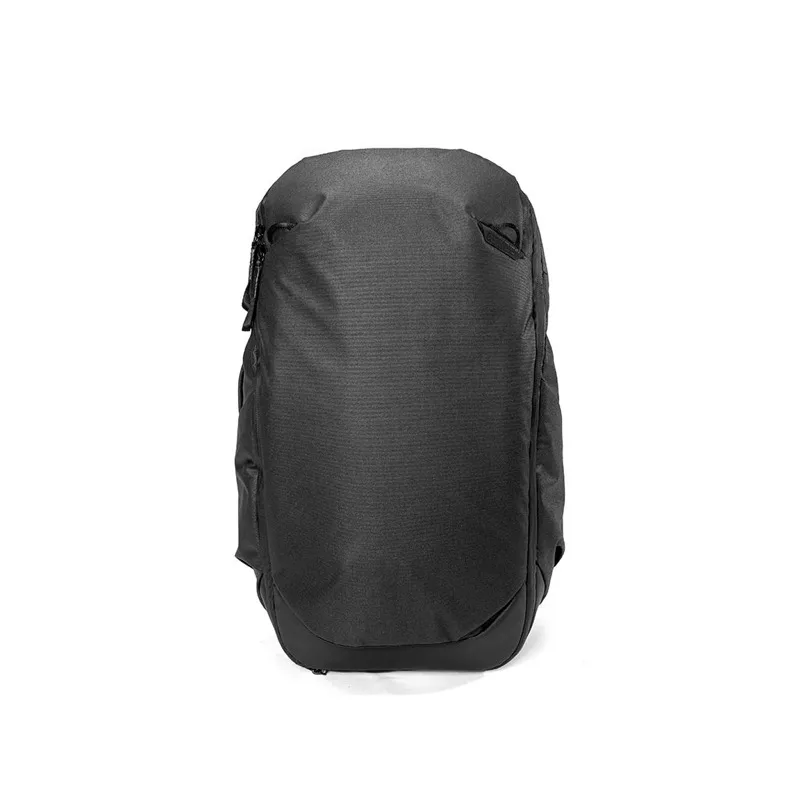
This is the pick if you want one bag that is a carry-on on the way out and a daypack at the destination. The 30L expands to 33 liters and compresses to 27, so it flies full and then cinches down for a day of walking. It has padded sleeves for a laptop and a tablet, a rear hatch for full access, side pockets that fit bottles or a travel tripod, and 360-degree grab handles, which sounds like marketing until you are yanking the bag sideways out of a packed bin. At 3.17 lbs it is noticeably lighter than the Aer, and the shell is 100 percent recycled 400D nylon with a weatherproof main zip.
It is also the natural choice if you carry camera gear, because the whole Peak Design ecosystem (packing cubes, camera cubes, the Peak Design Travel Tripod we reviewed) is designed to drop into this bag.
The honest negative is structure. The 400D shell is softer than the Aer’s ballistic nylon, the laptop sleeve is good but not suspended in the same fortress-like way, and if you load it past 30 liters regularly the comfort ceiling arrives sooner. REI lists it at $229.95, and Peak Design sells the same bag directly.
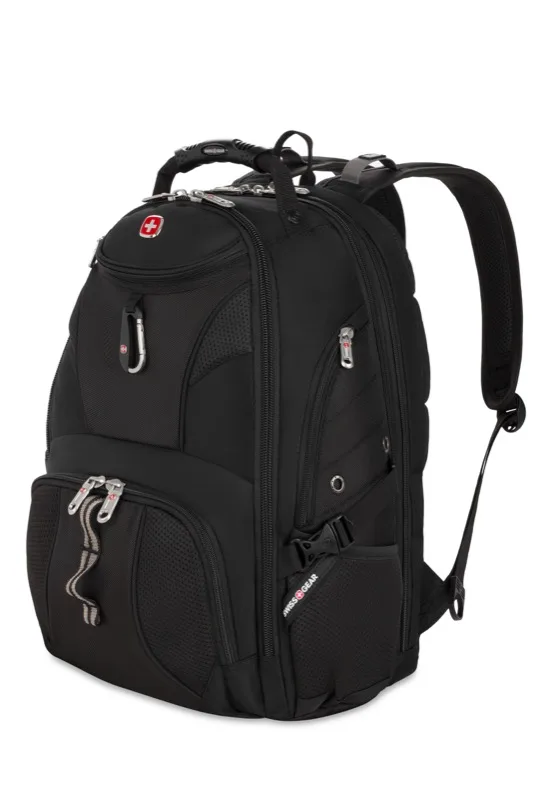
This is the pick if the main event is getting a big laptop through airports cheaply and comfortably. The 1900 ScanSmart has been around for over a decade for one reason: it works. The laptop compartment unzips and lays flat, which is the TSA checkpoint-friendly design that lets the bag go through the scanner with the laptop still inside at standard lanes. It swallows laptops up to 17 inches, which neither premium bag above officially handles, and adds a floating TabletSafe pocket, an RFID-blocking pocket, an accordion file section, and side bottle pockets. Capacity is 31 liters at 3.3 lbs, in 1200D ballistic polyester.
At $99 list, and often less at retailers, it costs well under half of either bag above. For occasional flyers, big-laptop owners, and anyone who treats bags as consumables, that is the right trade.
The honest negative is that it looks and feels like what it is: a corporate commuter bag scaled up. There is no lay-flat suitcase-style packing, no lockable zippers, no expansion, and the organization assumes an office life, not a hostel one. Pack a week of clothes in it and you are stuffing, not packing. One more practical note for 2026: TSA has been retiring the take-your-laptop-out rule lane by lane as new CT scanners roll out, so the ScanSmart trick matters most at airports still running older machines.
Buy by trip type, not by spec sheet. If everything you bring fits in one bag, the Aer Travel Pack 4 is built for exactly that life and the suspended laptop pocket is the safest place for a computer in this group. If you land and then walk ten miles a day, the Peak Design’s compression and lighter weight make it the better everyday shape. If your laptop is 17 inches, the SwissGear is the only one of the three that officially fits it.
Mind the airline, not just the bag. All three fit standard US carry-on sizers when packed sanely, but basic economy fares on several US airlines limit you to a personal item only, and a stuffed 35L will not pass as one. We keep a current breakdown of what each airline actually allows in our guides to travel gear, and if you fly with a second screen, our portable monitor guide covers how to pad it inside any of these bags.
Power is part of the kit. A laptop bag earns its keep when the charging pouch is already packed. Pair whichever bag you pick with a USB-C travel adapter and a power bank that is legal to fly, both of which live permanently in the front pocket of ours.
Airalo vs Holafly compared on real USD prices for Japan, Thailand, and Vietnam, daily data caps, hotspot rules, and who each eSIM is right for.
Verdict: Buy Airalo for most trips: it was cheaper than Holafly on every unlimited duration we checked in Japan, Thailand, and Vietnam, it sells fixed-GB plans that cost far less for light use, and it publishes its daily full-speed cap. Buy Holafly only if you want unlimited data sold by the exact day, from 1 to 90 days, and accept paying from $0.50 to about $25 more.
Airalo vs Saily compared on live prices, coverage, calls, apps, support, and Trustpilot scores, with a clear pick for each kind of trip.
Verdict: Airalo is the better default because its prices match Saily's almost to the cent and it adds calls and SMS plans, 3 to 365 day validity, and wider regional coverage. Saily is the better pick if you want a single reusable eSIM, faster in-app support, and a much higher Trustpilot score (4.7 against 4.1).
Anker power bank review for travelers: Laptop 25K 165W, Prime 26K 300W, MagGo 10K Slim and Nano 5K compared by weight, price, Wh, and the recall list.
Verdict: For most travelers carrying a laptop, the Anker Laptop Power Bank (25K, 165W) is the Anker to buy, because it pairs 92.5Wh of capacity with two built-in cables for $119.99. If you only charge an iPhone, buy the MagGo 10K Slim or the Nano 5K instead.