Best Travel Compression Bags: Roll-Up and Vacuum Bags That Shrink a Carry-On Load, and the Airport Catch
Verdict:For most travelers, the Eagle Creek Pack-It Compression Sack Set is the pick, because it shrinks bulky clothes by rolling out the air through a one-way valve, needs no pump, and costs $25. If you want a pump and a hard-wearing bag, buy the $79 Ekster TravelPack instead.
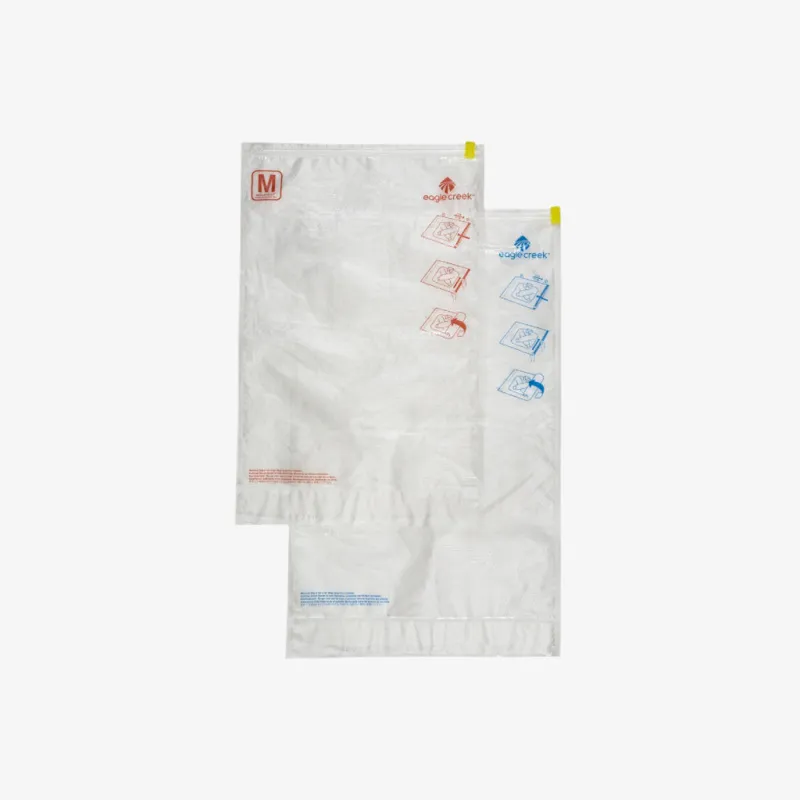
For most travelers, the Eagle Creek Pack-It Compression Sack Set is the compression bag to buy, because you shrink it by rolling the air out through a one-way valve, so there is no pump to charge or lose, and the medium and large pair costs $25. If you want a bag that holds its seal and a pump that fits in a jacket pocket, buy the Ekster TravelPack Vacuum Kit for $79 instead.
This article is about roll-up and vacuum compression bags: the plastic or nylon sacks with a valve that you squeeze or pump air out of. Zippered packing cubes with a second compression zipper are a different product, and we cover those in our best compression packing cubes roundup. If you are deciding between organizing and shrinking, our best packing cubes guide sorts that out first.
Some links in this article are affiliate links. If you buy through them, we earn a small commission at no extra cost to you. We only link to products we would actually recommend. If it does not hold up in real use, it is not here.
This is the pick because it removes the one part of vacuum bags that fails on the road, the pump. Eagle Creek sells a medium and a large sack for $25. The medium is 24.5 by 15.5 inches (62 by 39 cm) with 6 liters of internal capacity, and the large is 28.5 by 17.5 inches (72 by 44 cm) with 13 liters. Eagle Creek lists the weight at 2 ounces (57 grams).
You fill the sack, close the top zip, and roll it from the closed end toward the valve so the air escapes through a one-way pressure valve. Eagle Creek says the sacks “save up to 80% packing volume by removing excess air from bulky garments.” Treat 80 percent as the best case on a pile of puffy items, not a promise for a stack of T-shirts. The shell is a nylon, PE and laminated mesh construction made without intentionally added PFAS, and the zip top helps keep a leaking shampoo bottle from soaking the contents.
The honest negative is that rolling is hard work on a full sack, and it never gets as flat as a pumped bag. A Rick Steves forum member put the technique plainly: “You get the air out by rolling up tightly and squeezing.” If you pack a week of heavy winter layers and want the tightest result, a pump gets further.
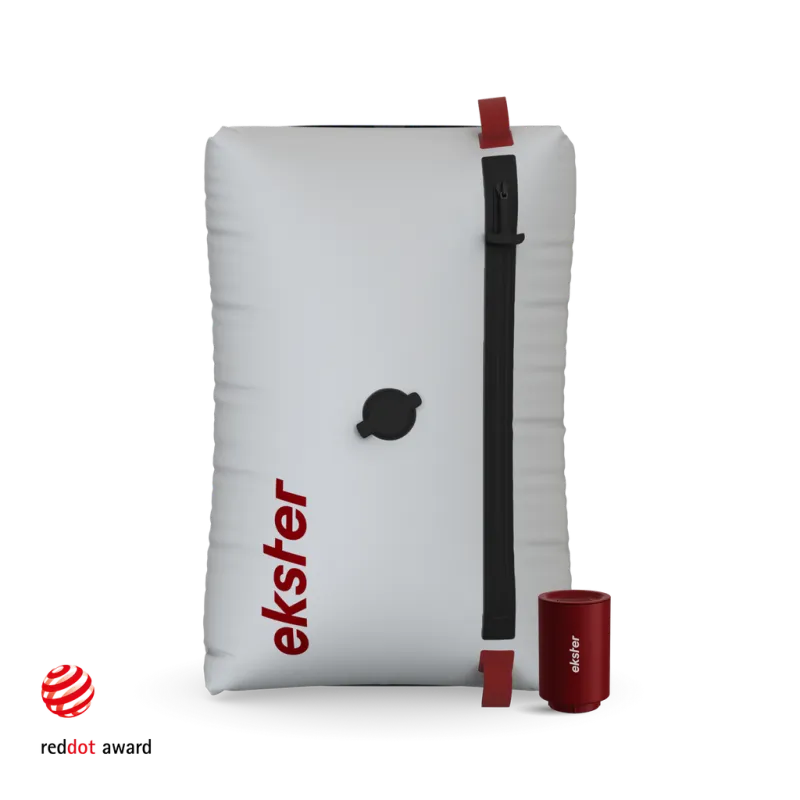
The TravelPack is the pick if you want real vacuum compression without hauling a household vacuum. One kit is a single bag plus a pump for $79, and a two-pack is $99. The bag measures 12 by 19 by 4 inches (30 by 48 by 10 cm) and holds about 19.5 liters, and it is made of waterproof, anti-rip nylon rather than thin plastic. Ekster says it fits 10 or more days of clothing and gives you 60 percent more carry-on space, a vendor figure we could not verify.
The pump is the reason to pay more. It is a rechargeable USB-C mini pump that weighs 3 ounces (86 grams), and Ekster rates it for up to 45 uses per charge. That matters because PureWow’s tester found that mini pumps worked on smaller bags, but she needed a full-size household vacuum to get a tight seal on the larger ones. The TravelPack is sized for the pump rather than the other way around.
The honest negative is the price per bag and the extra battery device. At $79 it costs more than three Eagle Creek sets, and if the pump dies or you forget the charger, you are back to rolling. It is also a single fixed size, so a large winter coat will not go in.
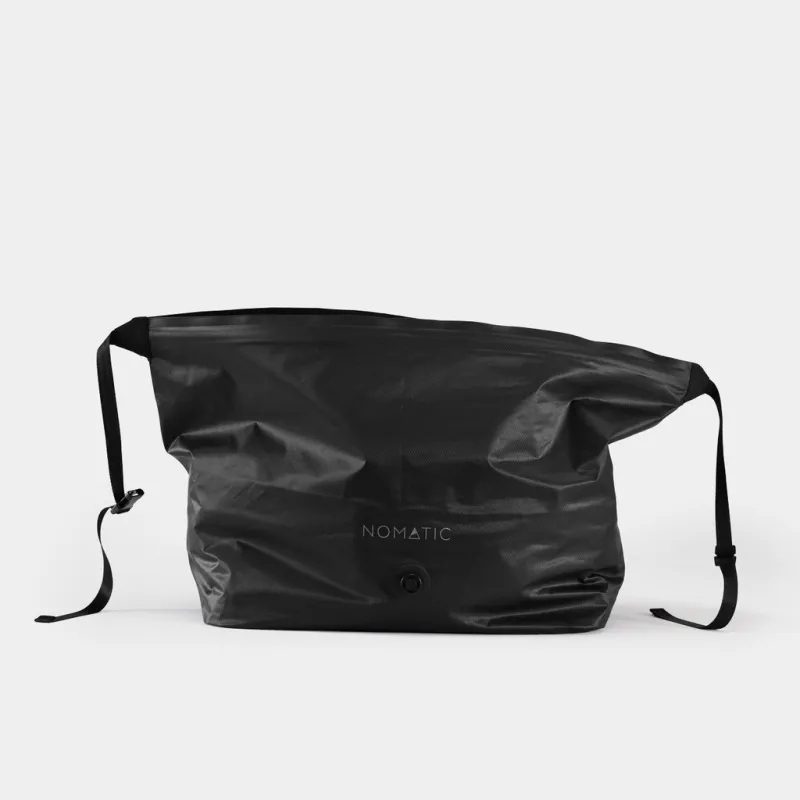
The Nomatic Vacuum Bag 2.0 is the pick for a traveler who carries one big bag of bulky layers and wants it to be waterproof. It comes in a Large at 16 by 22 inches and an XL at 16 by 30 inches. The XL weighs 0.90 pounds (about 408 grams) and costs $49.99, and the Large weighs 0.53 pounds (about 240 grams).
Nomatic lists the bag as “No Vacuum Needed.” You pack it, seal the press-and-seal opening, then cinch it with a compression zipper and adjustable straps. The page describes water-resistant materials with welded seams, and a customer review notes the one-way valve can pull out more air with an optional micro pump. Nomatic’s page gives no compression percentage, only that it compresses more than the first version, so we do not quote one here. The rating on the page is 4.4 out of 5 from 141 reviews.
The honest negative is weight. At 0.90 pounds the XL is the heaviest bag here, and a compression bag does not remove a gram from what is inside it. PureWow makes the same point about the whole category: these bags are “reducing your bag volume significantly, but they aren’t decreasing weight.” Check your airline’s carry-on weight limit before you pack the space you just gained.
TSA lists vacuum-sealed bags as allowed in carry-on and checked bags, but its wording is lukewarm: “Vacuum-sealed clothes bags are allowed but not encouraged.” The page adds, “If they alarm, the TSA officer may need to open them for inspection.” That is the scenario to plan for. Once a vacuum-sealed bag is opened, the contents expand back to full size, and the blog Your Mileage May Vary warns, “You’ll have a heck of a time getting everything back into your bag at the TSA checkpoint.”
The practical fix is to pack so you can reseal. A roll-up sack like the Eagle Creek needs only your hands to be rolled again at a checkpoint table. A pumped bag needs the pump, and a pump is another item in your carry-on. If you cannot repack a bag standing at a checkpoint table, compress less.
Compression also leaves creases. The same blog notes that “your clothes will be super wrinkled when the airlock is released,” so keep dress shirts and anything you need to look sharp out of the bag and use compression for sweaters, fleece, sleepwear and towels.
The decision
If you want the cheapest, simplest option, buy the Eagle Creek Pack-It Compression Sack Set. Two sacks, no pump, 2 ounces (57 grams), $25.
If you want the flattest result and will carry a pump, buy the Ekster TravelPack Vacuum Kit. Waterproof nylon, a 3-ounce (86 gram) USB-C pump, $79, at the cost of a battery to charge.
If you compress a lot of bulk into one waterproof bag, buy the Nomatic Vacuum Bag 2.0. The XL is 16 by 30 inches and $49.99, and it is the heaviest at 0.90 pounds.
If you mostly need to organize rather than shrink, skip compression bags and buy compression packing cubes. A cube you open at a checkpoint is easy to close again, because the zipper does the work and nothing springs back.
Airalo vs Holafly compared on real USD prices for Japan, Thailand, and Vietnam, daily data caps, hotspot rules, and who each eSIM is right for.
Verdict: Buy Airalo for most trips: it was cheaper than Holafly on every unlimited duration we checked in Japan, Thailand, and Vietnam, it sells fixed-GB plans that cost far less for light use, and it publishes its daily full-speed cap. Buy Holafly only if you want unlimited data sold by the exact day, from 1 to 90 days, and accept paying from $0.50 to about $25 more.
Airalo vs Saily compared on live prices, coverage, calls, apps, support, and Trustpilot scores, with a clear pick for each kind of trip.
Verdict: Airalo is the better default because its prices match Saily's almost to the cent and it adds calls and SMS plans, 3 to 365 day validity, and wider regional coverage. Saily is the better pick if you want a single reusable eSIM, faster in-app support, and a much higher Trustpilot score (4.7 against 4.1).
Anker power bank review for travelers: Laptop 25K 165W, Prime 26K 300W, MagGo 10K Slim and Nano 5K compared by weight, price, Wh, and the recall list.
Verdict: For most travelers carrying a laptop, the Anker Laptop Power Bank (25K, 165W) is the Anker to buy, because it pairs 92.5Wh of capacity with two built-in cables for $119.99. If you only charge an iPhone, buy the MagGo 10K Slim or the Nano 5K instead.